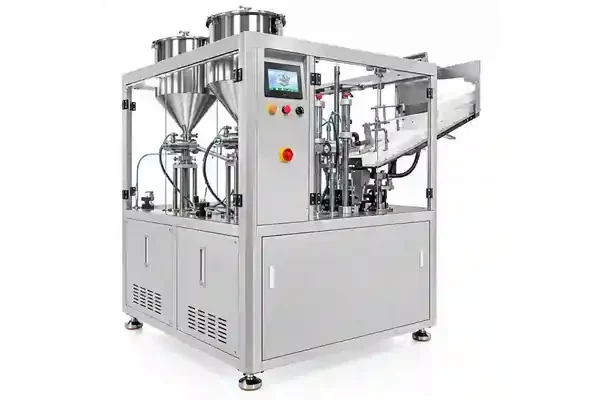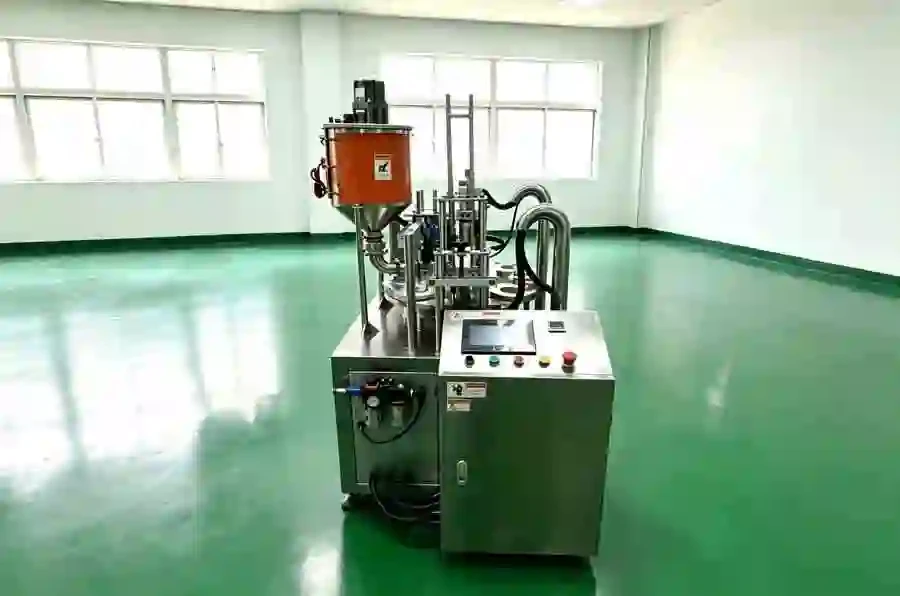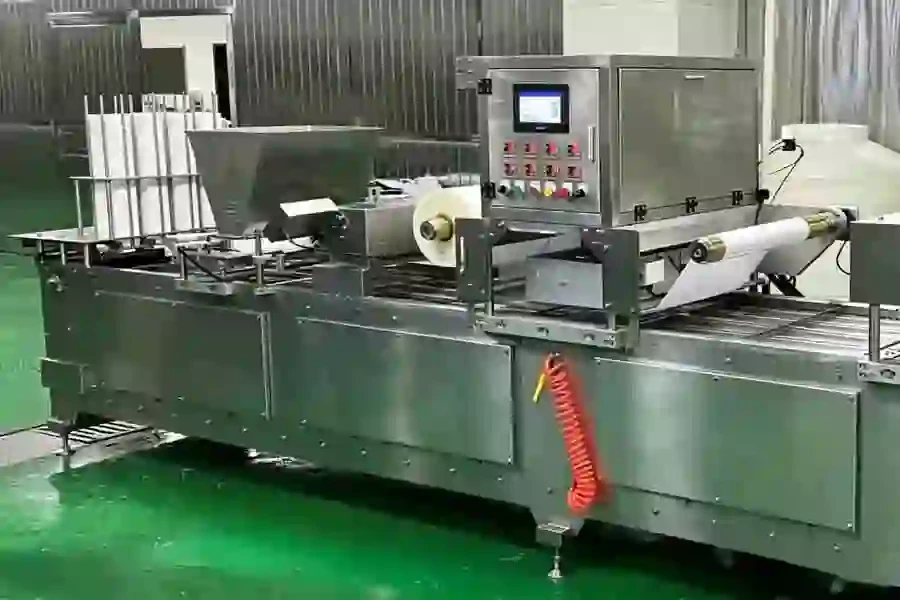
The global olive oil market is undergoing a significant transformation. Today’s consumers are not only looking for the health benefits and rich flavor of olive oil itself, but also placing greater emphasis on packaging appearance, filling consistency, leak-proof performance, and overall product presentation. As a premium product category with strong market potential, olive oil packaging has become a critical factor in building brand competitiveness. From extra virgin olive oil to organic, flavored, and blended edible oils, the flawless presentation of every bottle relies on efficient and precise filling equipment.
For this reason, olive oil filling machines are playing an increasingly important role in modern production lines. They serve as the core equipment that seamlessly transfers olive oil from storage tanks into retail-ready packaging with accuracy and efficiency. This article provides a comprehensive overview of olive oil filling machines, covering packaging types, working principles, machine configurations, key technical advantages, and essential purchasing considerations. The goal is to help manufacturers improve production efficiency, reduce product waste, and strengthen their competitive position in both domestic and international markets.
What Is Olive Oil?
Olive oil is a vegetable oil obtained by pressing whole olives (the fruit of Olea europaea, a traditional tree crop of the Mediterranean Basin) and extracting the oil.
It is commonly used in cooking for frying foods, as a condiment, or as a salad dressing. It can also be found in some cosmetics, pharmaceuticals, soaps, and fuels for traditional oil lamps. It also has additional uses in some religions. The olive is one of three core food plants in Mediterranean cuisine, with wheat and grapes. Olive trees have been cultivated around the Mediterranean since the 8th millennium BC.
In 2022, Spain was the world’s largest producer, manufacturing 24% of the world’s total. Other large producers were Italy, Greece, and Turkey, collectively accounting for 59% of the global market.
The composition of olive oil varies with the cultivar, altitude, time of harvest, and extraction process. It consists mainly of oleic acid (up to 83%), with smaller amounts of other fatty acids including linoleic acid (up to 21%) and palmitic acid (up to 20%). Extra virgin olive oil (EVOO) is required to have no more than 0.8% free acidity, and is considered to have favorable flavor characteristics.from Wiki
Olive Oil Package Type
1.Glass Bottle
Glass bottles are one of the most popular premium packaging options for olive oil, especially for extra virgin olive oil. Glass is chemically inert and does not react with oils, providing excellent protection against oxygen exposure and helping preserve the oil’s original quality and flavor. Dark-colored glass bottles, such as dark green, amber, or brown, can block more than 99% of UV light, effectively slowing photo-oxidation while helping retain valuable nutrients like polyphenols and vitamin E.
Advantages
- Chemically stable with no risk of plasticizer contamination, ensuring product safety
- Excellent oxygen barrier properties that help reduce oxidation and rancidity
- Clear glass bottles allow consumers to see the oil color directly, increasing purchasing confidence
- Dark-colored bottles provide superior light protection for extended shelf life
Disadvantages
- Heavier than plastic containers, resulting in transportation costs that are typically 40%–60% higher
- Fragile and more prone to breakage, increasing both product loss and insurance costs
- Usually limited to capacities of 1 liter or less, making them less suitable for large-volume packaging
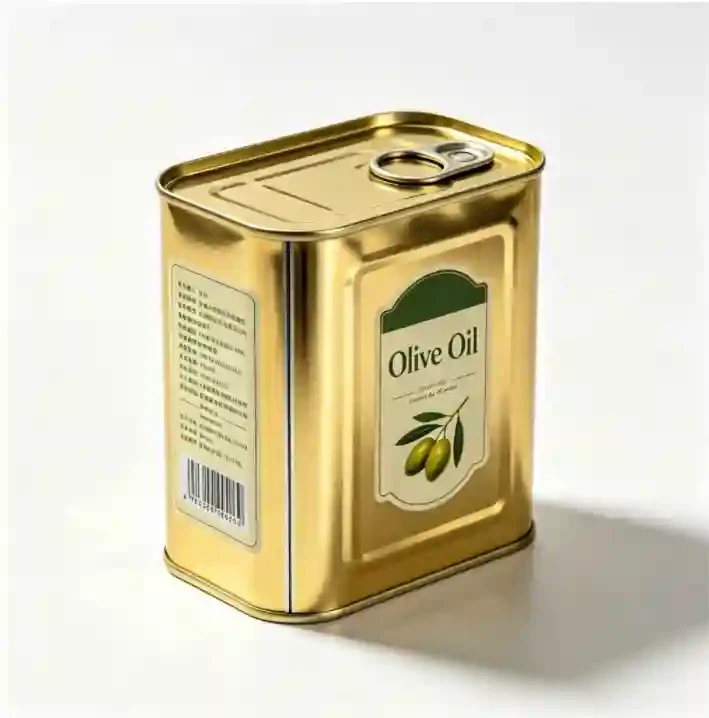
2.Metal Cans (Tinplate Cans / Tins)
Metal cans are among the most protective packaging solutions for olive oil, making them ideal for products that require extended shelf life or long-distance transportation. Tinplate cans provide a complete barrier against light and oxygen, helping maintain oil quality over time. Their durable structure also makes them highly suitable for stacking, storage, and logistics operations.
Advantages
- Complete protection from light and oxygen, offering superior preservation performance
- Strong and pressure-resistant, ideal for long-distance shipping and warehouse storage
- The can surface can be directly printed with high-quality graphics and branding, eliminating the need for separate labels
Disadvantages
- The can body may become dented or deformed during handling or transportation
- Consumers cannot directly see the oil inside, so product information relies entirely on packaging design and labeling
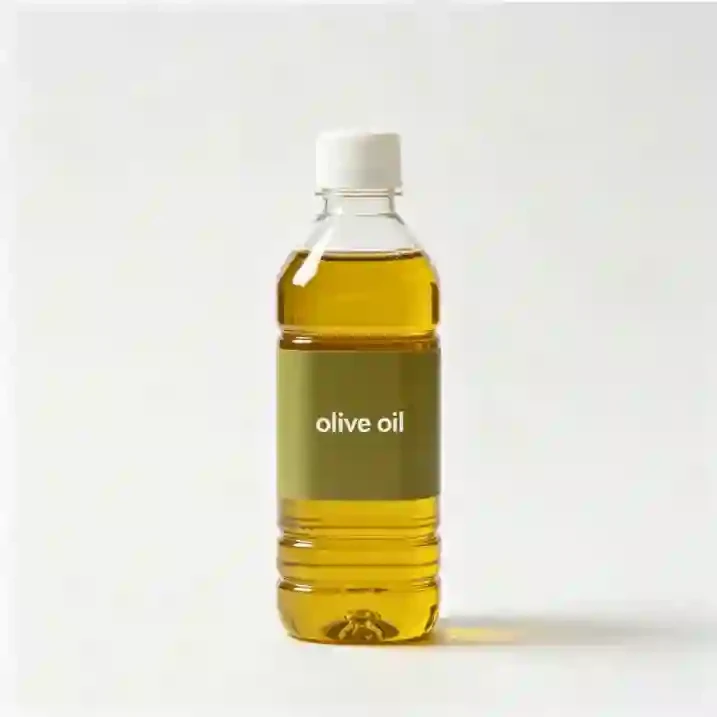
3.PET Plastic Bottles
PET bottles are the most widely used and cost-effective packaging solution for olive oil. They are lightweight, shatter-resistant, highly transparent, and more affordable than glass bottles of the same size.
Advantages
- Low cost, ideal for mass-market and family-size products
- Lightweight for lower shipping costs and better logistics efficiency
- Clear appearance helps display oil color and quality
- Recyclable and environmentally friendly
Disadvantages
- High light transmission may accelerate oxidation unless dark PET or full-body labels are used
- Thin bottles can deform easily and may appear less premium
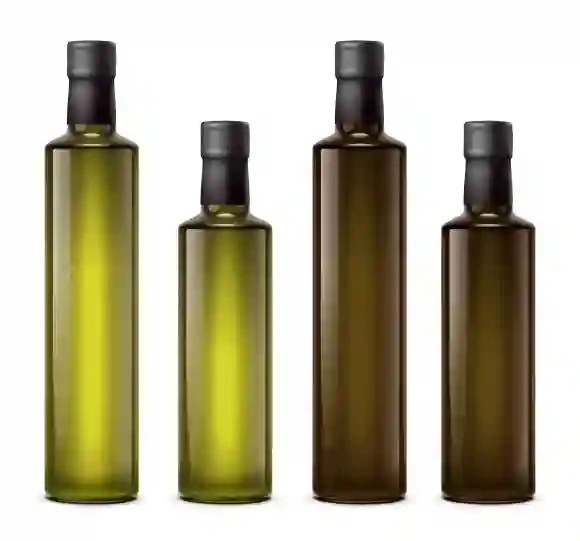
What Is an Olive Oil Filling Machine?
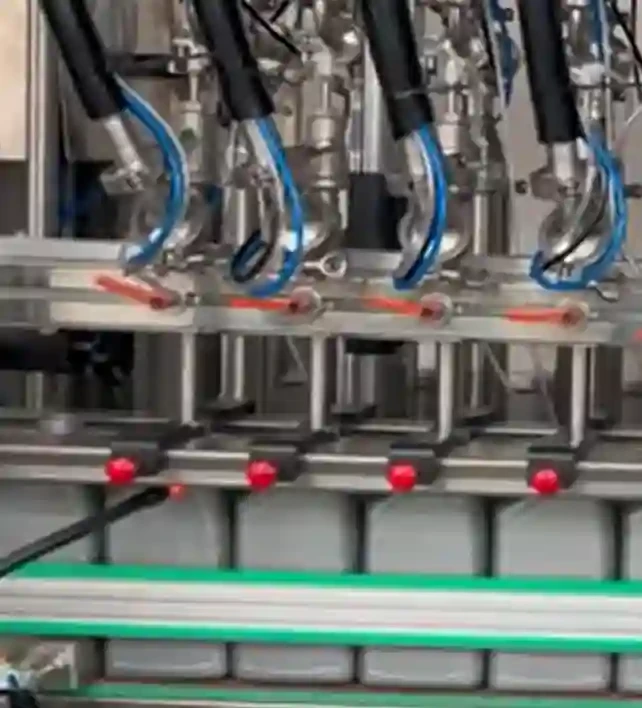
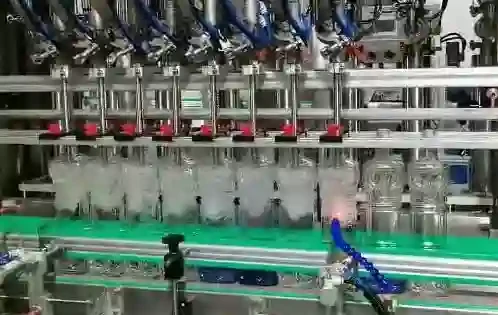
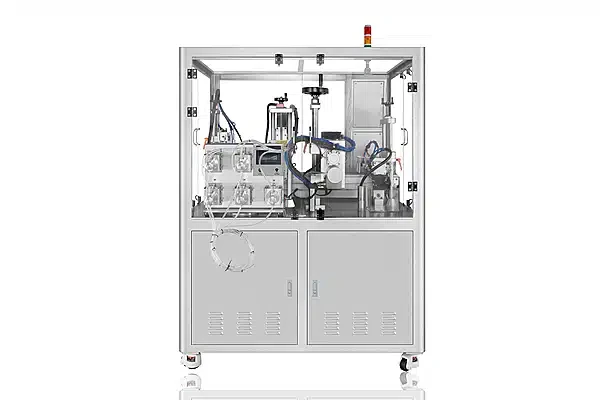
olive oil filling machine is a specialized packaging equipment used to fill olive oil from storage tanks or transfer containers into various retail packaging containers, such as glass bottles, PET bottles, and metal cans, in an accurate and hygienic manner. It can flexibly adapt to different bottle types and different olive oil viscosities, ensuring consistent filling volume, clean bottle mouths, while effectively reducing oxidation and preventing overflow. It is the core part of an olive oil filling production line and a key equipment for olive oil manufacturers to achieve high-quality and efficient packaging
Types of Olive Oil Filling Machines
1.semi-automatic olive oil filling machine
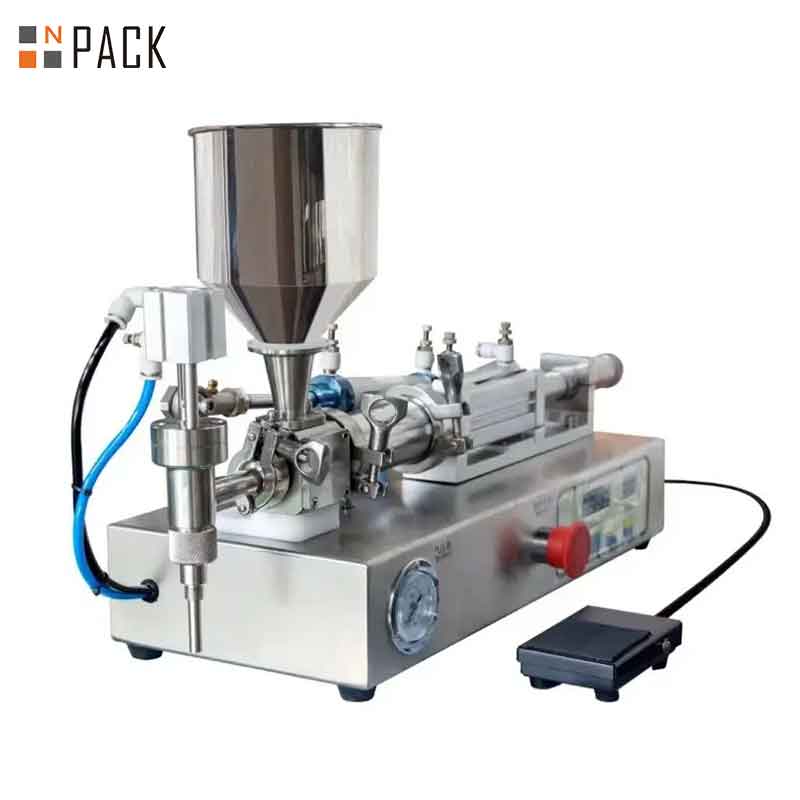
semi-automatic filling machine is positioned between manual and fully automatic systems. Bottles are manually placed under the filling nozzles, while the filling process itself is completed automatically. It is suitable for small-scale production needs and is an ideal choice for small manufacturers.
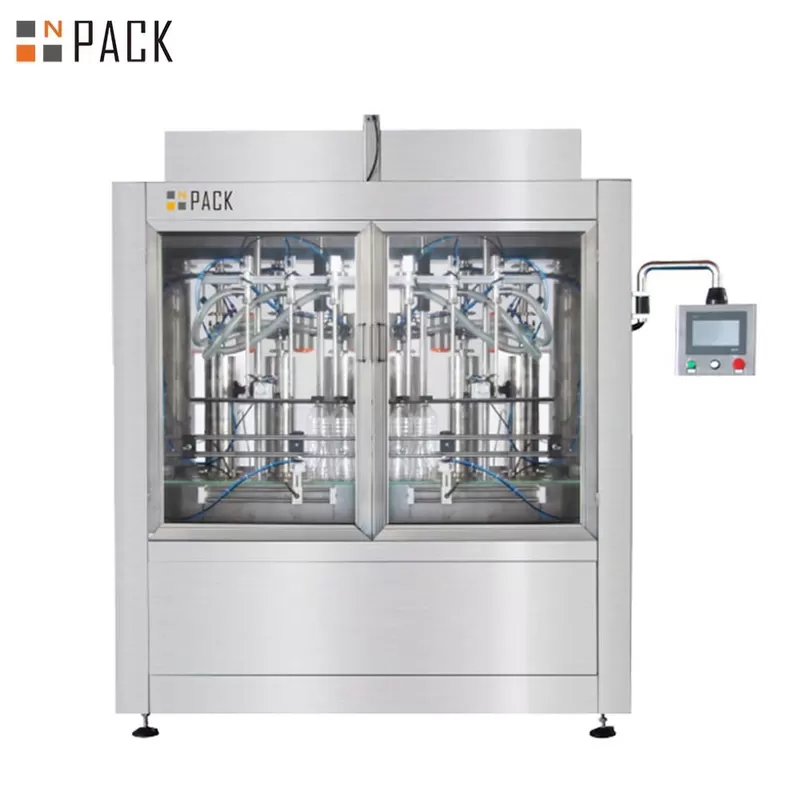
2.fully automatic olive oil filling machine
fully automatic olive oil filling machine achieves complete automation of the filling process with minimal manual supervision required. It is equipped with an oil supply system, filling system, anti-drip system, conveying and positioning systems, and more. The machine can perform stable and efficient high-volume olive oil filling, making it suitable for medium and large-scale manufacturers.
Olive Oil Filling Technologies
Olive oil filler mainly use the following two core filling technologies based on different measuring methods:
Piston Filling Technology
Piston filling technology is the most widely used solution for olive oil filling and is especially suitable for olive oil packaging applications. The machine uses a piston system to draw and dispense oil for accurate volumetric filling. The typical filling range is 100ml to 5L, with filling accuracy maintained at ±2–3ml for volumes up to 1000ml and ±3–5ml for volumes up to 5000ml. It is widely used for bottles, cans, buckets, and other containers. With its reliable performance and cost-effectiveness, it remains the mainstream choice in the market.
Flow Meter Filling Technology
Flow meter filling technology uses high-precision electronic flow meters to monitor the oil volume in real time during filling. It offers a wider filling range, typically from 100ml to 10L, with higher filling accuracy. However, the equipment cost is relatively higher compared to piston filling systems.
Feature of Olive Oil Filling Machines
Servo Motor Control System
Equipped with a servo motor control system for high filling accuracy, reduced product waste, and lower maintenance costs.
Anti-Drip Filling Nozzles
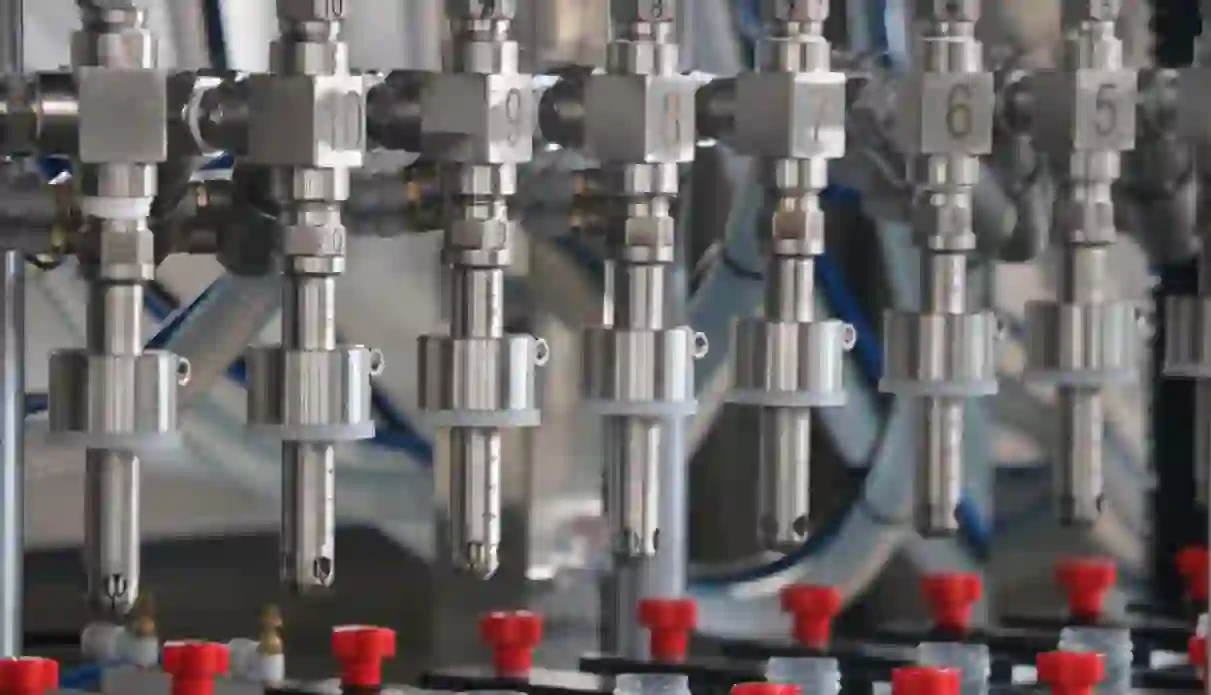
Uses 316 stainless steel anti-drip filling nozzles with a vacuum suction system to prevent oil residue on bottle necks and conveyor belts.
Food-Grade Stainless Steel Structure
The entire machine is made of food-grade stainless steel, offering strong corrosion resistance, long service life, and compliance with GMP standards.
Intelligent PLC Control System
Features an intelligent PLC control system with simple and intuitive operation, one-touch parameter setting, and an automatic alarm system for improved safety.
Complete Olive Oil Filling Line
Modern olive oil production lines usually include more than just a filling machine.
Common Equipment in an Olive Oil Production Line
Bottle Unscrambler
Automatically arranges disordered empty bottles into an orderly line and feeds them into the production line.
Automatic Inverting Bottle Air Rinsing Machines
Mainly uses ionized air technology to remove dust and impurities inside bottles.
Olive Oil Filling Machine
Typically uses piston or flow meter technology for high-precision filling.
ROPP Capping Machine
Suitable for ROPP aluminum caps and tamper-evident caps, improving sealing performance and preventing leakage.
Double Side Labeling Machine
Applies labels accurately on both sides of bottles.
Case Erector → Cartoning Machine → Case Sealer → Palletizer
Automatically completes carton forming, product packing, carton sealing, and pallet stacking.
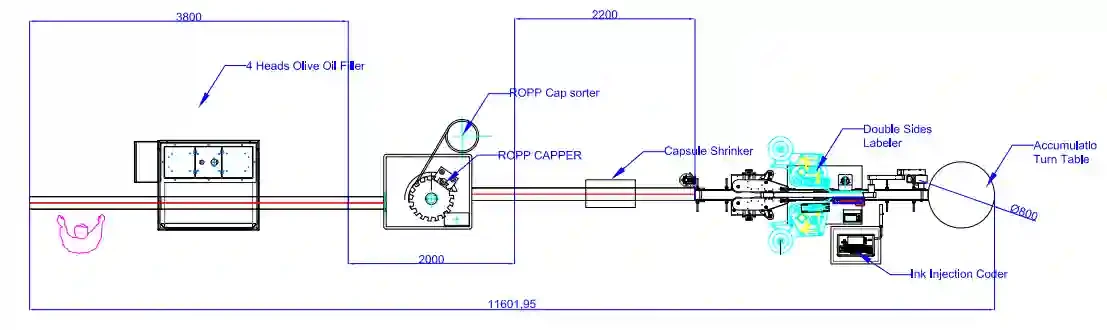
Olive Oil Filling Line Case Study — 4 Nozzle Olive Oil Filling Line
Project Background
In 2025, a customer from Spain found that their existing semi-automatic olive oil filling line could no longer meet production demands, so they contacted NPACK(Packing Machine Manufacturer) for a fully automatic olive oil filling solution. Based on the physical characteristics of olive oil, as well as the customer’s bottle types and packaging specifications, NPACK customized and manufactured a four-head fully automatic filling line, significantly improving production efficiency.
Filling Product :Olive Oil
Core Requirements
- Achieve high-precision filling with no dripping during the filling process
- Ensure stable ROPP capping performance and accurate labeling
- Enable full-process quality monitoring and traceability
Solution
The production line integrated a four-head filling machine, ROPP capping machine, ROPP cap sorter, capsule shrink machine, inkjet coding machine, double-side labeller machine, and accumulation turntable to achieve fully automatic production.
Project Results
Production capacity was significantly increased, fully meeting the customer’s current production requirements.
How to Choose Right Olive Oil Filling Machine?
1.Production Capacity
Determine hourly output, daily production volume, and future expansion plans to ensure the machine can support long-term production growth.
2.Bottle Compatibility
The machine should handle glass bottles, PET bottles, metal cans, and containers with different shapes and heights to meet diverse packaging requirements.
3.Filling Accuracy
High filling accuracy is especially important for premium olive oil brands. Machines with temperature compensation functions are recommended to maintain product consistency and meet export standards.
4.Automation Level
Choose between semi-automatic, fully automatic, or intelligent production solutions based on budget and production scale.
5.After-Sales Service
Reliable manufacturers should provide remote technical support, spare parts, installation guidance, training, and electrical drawings to ensure stable long-term operation.
Conclusion
As the global olive oil market continues to grow, manufacturers are placing greater focus on product quality, packaging performance, and production efficiency. Choosing the right olive oil filling machine is essential for achieving accurate filling, reducing waste, improving packaging quality, and enhancing brand competitiveness.
Whether for glass bottles, metal cans, or PET containers, modern olive oil filling equipment can provide stable, efficient, and precise production. By selecting the right machine configuration and a reliable manufacturer, olive oil producers can improve productivity and better meet the demands of both domestic and international markets.