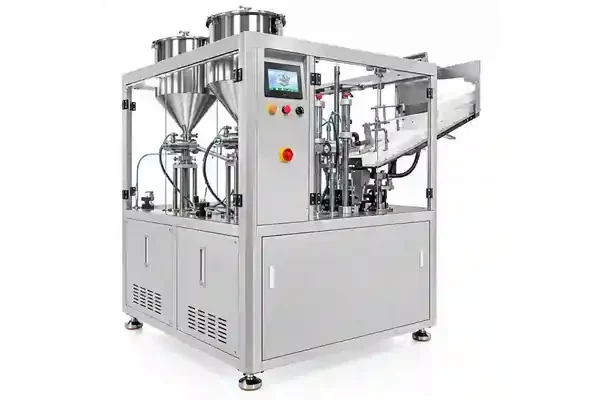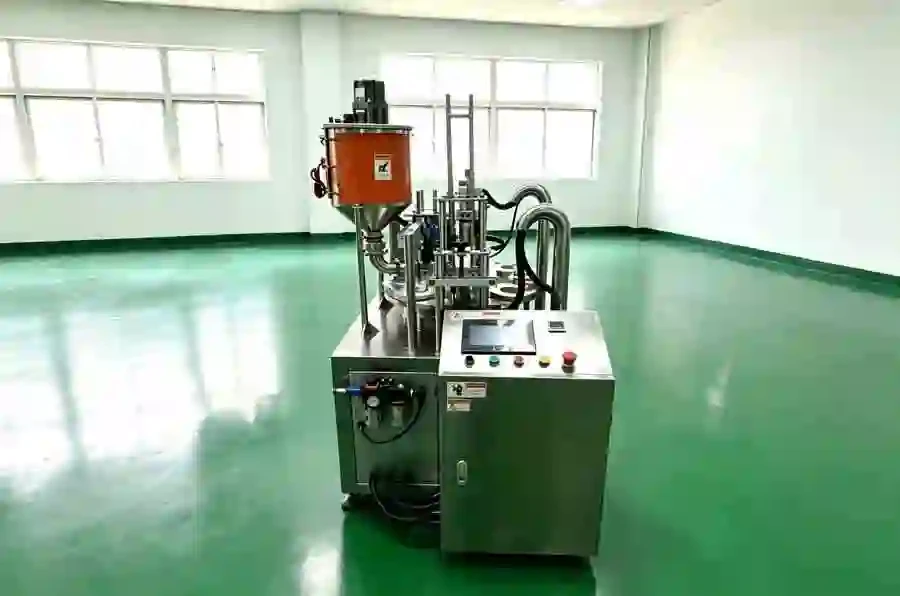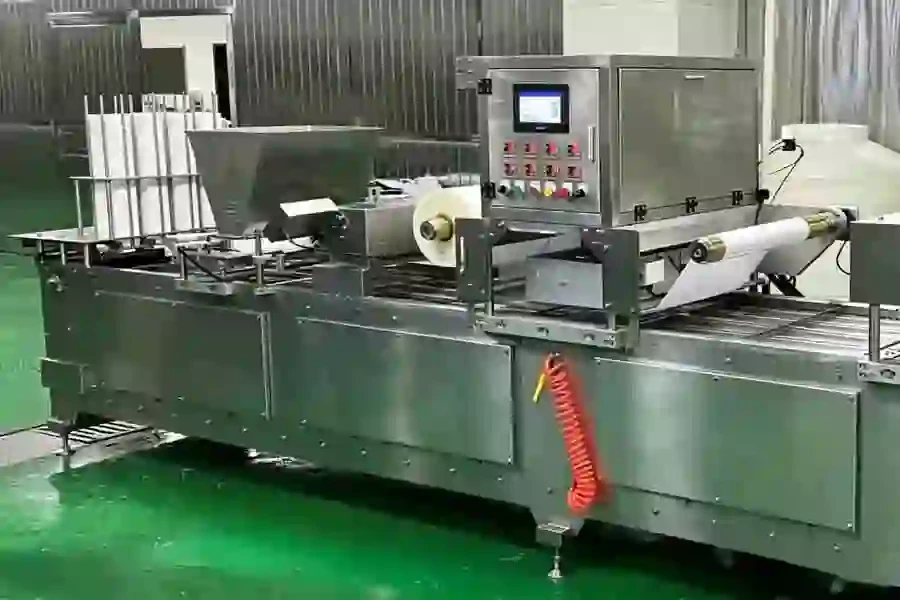
In the increasingly competitive landscape of the daily chemical industry, production efficiency, filling precision, and daily chemical filling mahcine stability have emerged as core competencies for enterprises. For daily chemical products—such as shampoos, laundry detergents, body washes, and disinfectants—the daily chemical filling machine directly impacts both product quality consistency and overall production output.
Selecting the appropriate filling machine for daily chemicals is of paramount importance: a proper selection can boost production capacity, reduce costs, and ensure stable operations; conversely, an improper choice may lead to issues such as frequent downtime and inconsistent filling accuracy.
Deeply rooted in the filling machine industry, Npack provides customized solutions to clients worldwide. This guide offers a concise overview covering equipment types, core technologies, key features, and critical selection criteria, aiming to assist enterprises in optimizing their equipment procurement decisions and achieving efficient, stable, automated production.
Everything About Daily Chemical Products
Daily Chemical Products Viscosity Classification
| Viscosity Level | Viscosity Range (cP) | Typical Products | Flow Characteristics |
| Low Viscosity | 1 – 1,000 cP | Hand sanitizer, perfume, toner,disinfectant,mouthwash | Water-like, very high fluidity |
| Medium Viscosity | 1,000 – 10,000 cP | Shampoo, body wash, liquid detergent, dishwashing liquid | Moderate flow, slightly thick |
| High Viscosity | 10,000+ cP | cream, vaseline, hair wax, paste products | Slow to almost non-flowing, strong stringing effect |
Daily Chemical Products Common Bottle Packaging Types
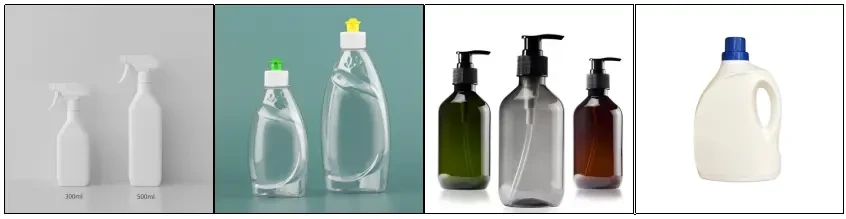
What Is a Daily Chemical Filling Machine?
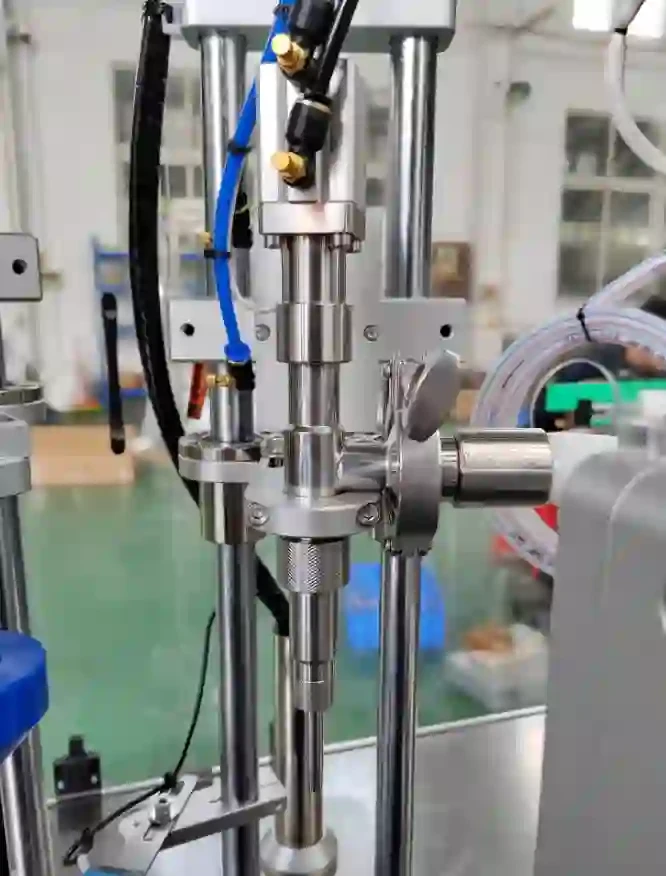
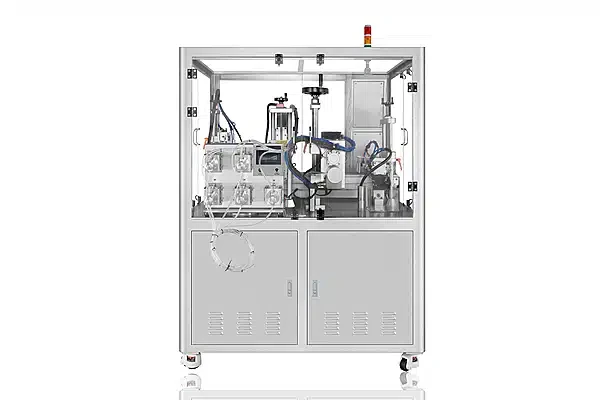
Daily chemical filling machines constitute a vital category within the packaging machinery industry. Their primary function is to quantitatively dispense viscous liquids—such as shampoos, hand sanitizers, body washes, laundry detergents, and lotions—into various containers, including bottles, jars, and pouches. Consequently, they serve as indispensable equipment for daily chemical enterprises seeking to implement automated production.
These filling machines are custom-designed to accommodate the specific characteristics of the materials being filled, as well as the shapes and specifications of the containers used. They are equipped with a diverse array of filling nozzles and pumps to effectively handle daily chemical products with varying viscosities. Furthermore, when dealing with corrosive or explosive liquids, specialized configurations are required: for corrosive liquids, the machine must feature a frame and filling heads constructed from corrosion-resistant materials; for explosive liquids, the equipment requires the installation of explosion-proof motors to ensure safe filling operations.
Classification of Daily Chemical Filling Machines
1.Overflow Filling Machine
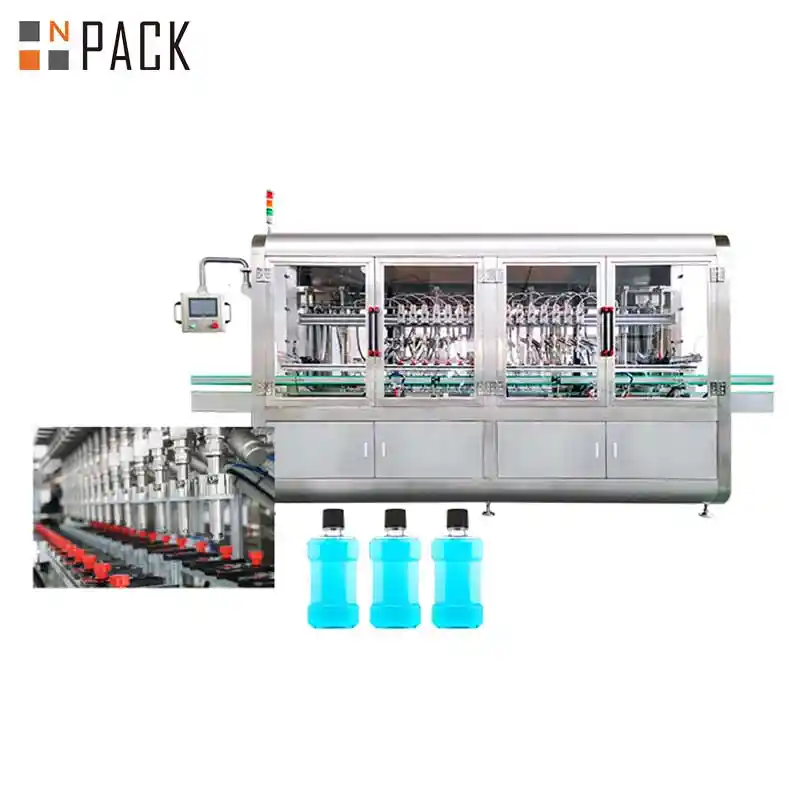
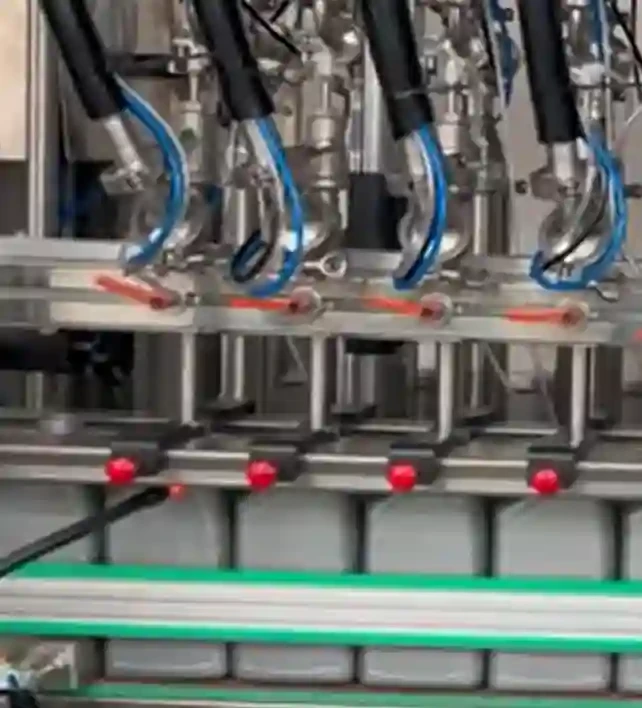
Mouthwash, glass cleaner, and floor cleaner have a viscosity of approximately 1–1,000 cP, with a texture characterized by water-like, very high fluidity. These products are best suited for an overflow filling machine. Designed with special overflow nozzles and a back-suction system, this machine effectively removes excess foam and prevents dripping during filling, maintaining both precision and cleanliness.
2.Piston Filling Machine
Shampoo, body wash, and liquid detergent have a viscosity of approximately 1,000–10,000 cP, with a texture characterized by moderate flow and slight thickness. These products are best suited for a piston filling machine, using filling nozzles with an anti-drip suck-back function to ensure filling accuracy.
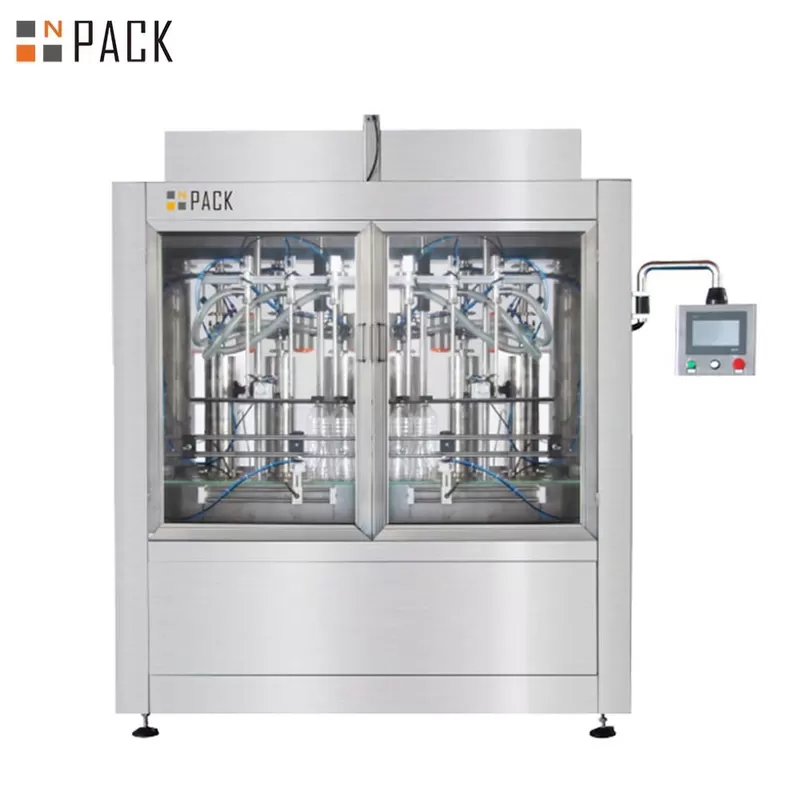
3.Rotary Lobe Pump Filling Machine
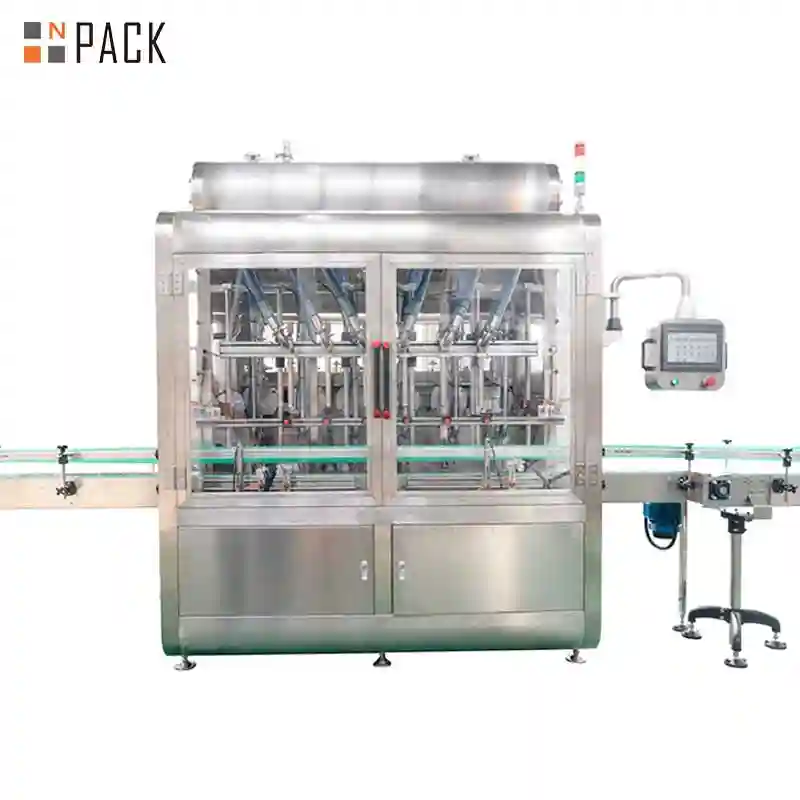
Cream, vaseline, hair wax, and paste products have a viscosity of approximately 10,000+ cP, with a texture characterized by slow to almost non-flowing behavior and a strong stringing effect. These products are best suited for a lobe pump filling machine. A servo-driven anti-drip nozzle enables clean filling for thick materials.
Whether piston, flow meter, or lobe pump, daily chemical filling machines follow a series of standardized procedures. The main steps are outlined below:
How Does Daily Chemical Filling Machine Work?
1.Empty Bottle Feeding and Arrangement
Empty bottles are fed either by an automatic bottle unscrambler or manually, then aligned and conveyed to the filling station on a conveyor belt.
2.Bottle Positioning and Detection
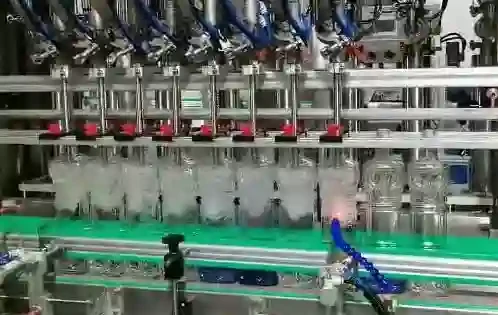
Photoelectric sensors detect when bottles reach the designated filling position. A bottle-clamping mechanism precisely secures each bottle, ensuring accurate alignment between the filling nozzle and the bottle opening.
3.Filling Nozzle Positioning
The filling nozzle descends into the bottle opening. For foaming or high-viscosity products, a diving nozzle design is used, allowing the nozzle to rise gradually during the filling process.
4.Quantitative Filling
Based on the preset filling volume, the system automatically draws or pumps the product into the bottle. The filling process is precisely controlled, and the flow stops automatically once the target volume is reached.
5.Anti-Drip Control
After filling, the system uses suck-back, air blow-off, or valve shut-off methods to remove or retract residual product from the nozzle, preventing dripping and contamination of the bottle opening.
6.Bottle Discharge and Conveying
Filled bottles are released and transported by the conveyor to the next process, such as capping or labeling. Meanwhile, the next set of empty bottles moves into position, and the cycle continues.
The entire process is controlled by a PLC system, requiring minimal manual intervention and enabling stable, continuous production ranging from dozens to hundreds of bottles per minute.
Complete Daily Chemical Production Line
Automatic daily chemical filling production line is a complete system composed of interconnected machines, specifically designed for packaging viscous liquids such as shampoo, hair conditioner, body wash, hand soap, and liquid detergent.
This system typically integrates the following main components:
1.Bottle Unscrambler
Automatically arranges empty bottles and conveys them onto the conveyor in the correct orientation.
2.Automatic Filling Machine
The core unit of the entire line, which fills viscous liquids into containers (bottles/jars) using methods such as piston pumps, lobe pumps, or gravity.
3.Capping Machine
Applies caps based on the container type for products like shampoo, conditioner, and body wash. It can handle screw caps, press-on caps, or flip-top caps, ensuring a secure and leak-proof seal.
4.Automatic Labeling Machine
Applies precise single-side or double-side labels to daily chemical containers according to customer requirements.
5.Coding Machine
Prints batch numbers, production dates, or expiration dates on each container.
6.Sleeve Labeling Machine / Heat Shrink Tunnel
Applies and shrinks tamper-evident seals to ensure product safety.
7.Cartoning Machine / Case Packing Machine
Packs finished bottles into cartons or outer cases for transportation.
All components operate in coordination and integrate seamlessly, forming a continuous and efficient viscous liquid bottling line.
Daily Chemical Filling Line Case Study — 6 Nozzle Liquid Soap Filling Line
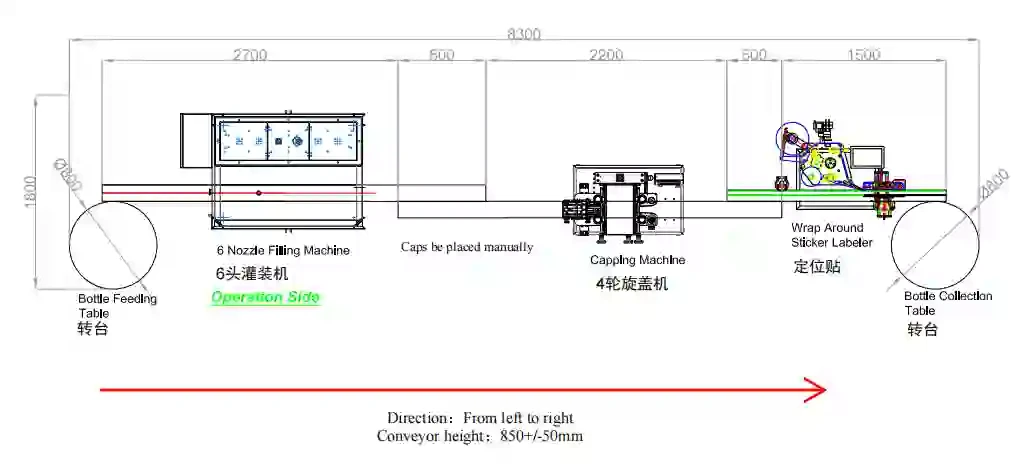
Project Background: In 2025, a client in Argentina expanded their market share by adding a new hand soap filling line. Npack customized and manufactured a 6-head filling line based on the client’s product characteristics and bottle shape and specifications, significantly improving production efficiency.
Filling Product: Lqiuid soap
Core Requirements: Achieve high-precision filling, stable capping, and full-process quality monitoring and traceability.
Solution: Integrated a rotary table, 6-head filling machine, 4-wheel capping machine, and round bottle labeling machine to realize fully automated production.
Project Results: Production output increased significantly, while material loss and labor dependency were reduced, fully meeting the client’s requirements for market expansion.
How to choose right daily chemical filling machine?
Selecting the right daily chemical filling machine requires evaluating several key factors to ensure reliable performance and good return on investment.
Product Type and Viscosity
Understand the product characteristics first. Low-viscosity liquids suit overflow filling machines, medium-viscosity products fit piston filling machines, and high-viscosity materials are better handled by lobe pump filling machines.
Filling Volume and Accuracy
The machine should match container sizes and meet required filling precision.
Production Speed
Ensure the output capacity meets current needs and allows for future growth.
Material Compatibility
Machine materials must be compatible with the product to avoid contamination or corrosion.
Level of Automation
Choose the automation level based on labor availability and efficiency goals.
Cost and Return on Investment
Balance the initial cost with long-term benefits such as durability, maintenance, and material savings.
Conclusion
In the daily chemical industry, selecting the right filling machine is critical to achieving consistent product quality, high efficiency, and stable production. By matching equipment type to product viscosity and production requirements, and by integrating a well-designed automated filling line, manufacturers can significantly improve output, reduce costs, and support long-term business growth.