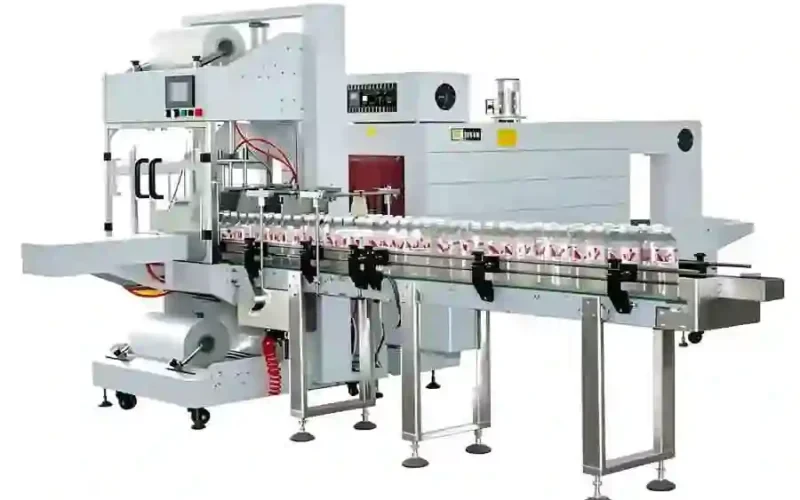

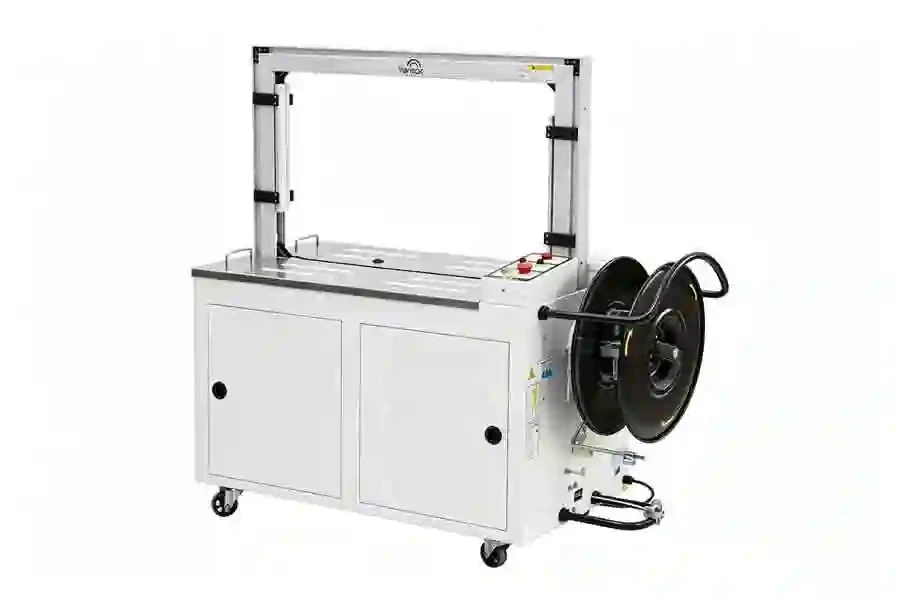
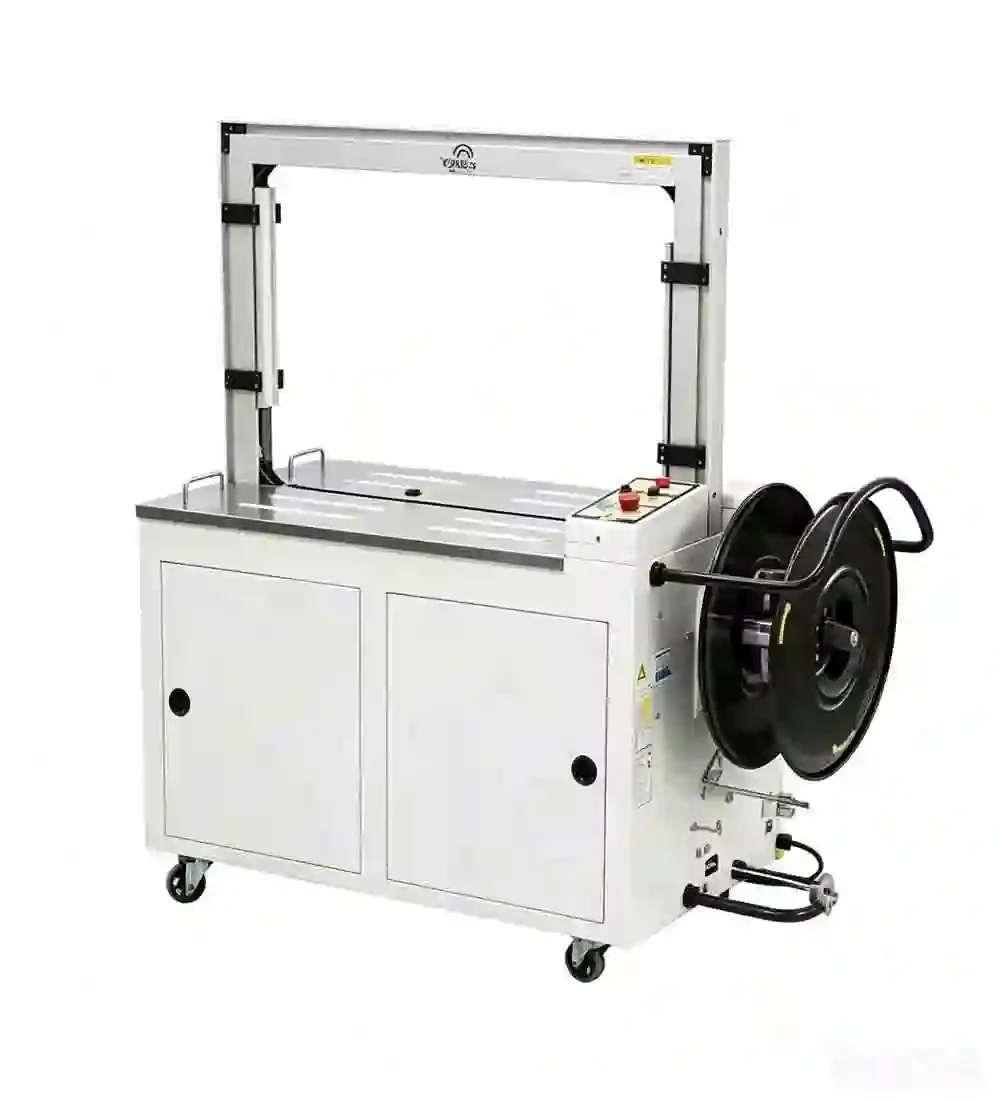
Automatic strapping machine—commonly referred to as a bundling machine—is a piece of packaging equipment designed to secure single or multiple items together by tightening and joining strapping bands, thereby facilitating handling and product transport. The strapping bands are secured using a heat-sealing process, ensuring that the products remain tightly bound.


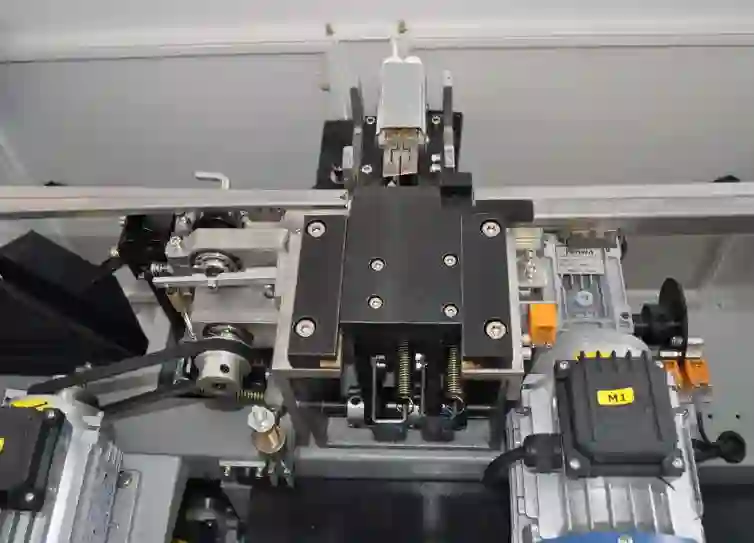
Main Features
1.Equipped with a steel knife box for enhanced wear resistance and more stable performance.
2.Features a unique tensioning design that delivers tighter and more secure strapping.
3.Clamshell panel structure allows easy maintenance, supports high-speed operation, and extends service life.
4.Controlled by a microcontroller system with complete functions and user-friendly operation.
5.Key electrical components are sourced from well-known brands to ensure reliable quality and stable performance.
6.Can operate as a standalone unit or be integrated with a customized conveyor for fully automated, unmanned strapping.
7.Includes added safety protection, designed for continuous 24-hour operation.
Technical Parameters
| 1 | Power supply | 380V 50/60Hz 1.4kW |
| 2 | Overall size | L1580mm × W650mm × H1418mm |
| 3 | Binding specification | Minimum packaging size: 150mm wide × 60mm highStandard frame size: 800mm wide × 600mm high (customizable as needed) |
| 4 | Work table height | 450mm (customizable as needed) |
| 5 | Bearing capacity | 100kg |
| 6 | Binding speed | ≤ 2.5 seconds/track |
| 7 | Binding force | 0-60kg (adjustable) |
| 8 | Binding form | parallel 1 to multiple channels, with methods such as photoelectric control and manual operation. |
| 9 | Strap specifications | width 9-15 (± 1) mm, thickness 0.55-1.0 (± 0.1) mm |
| 10 | Disc specifications | width 160-180mm, inner diameter 200-210mm, outer diameter 400-500mm. |
| 11 | Bonding method | hot melt method, bottom bonding, bonding surface ≥ 90%, bonding position deviation ≤ 2mm. |
| 12 | Machine weight | 280kg |
| 13 | Optional additional price increase | ① Enlarged size, ② Pressurized |
How to Operate a Automatic Strapping Machine?
automatic strapping machines follow a similar working principle and include several core components:
1.Strap Dispenser
Holds the strap coil and feeds the material into the machine for continuous operation.
2.Sealing Head
Wraps the strap around the package, applies the preset tension, seals the ends, and cuts the strap. After each cycle, the strap is automatically fed back into position for the next package. Depending on the setup, the sealing head can be located above, below, or beside the product.
3.Strap Track
Guides the strap around the package. In semi-automatic machines, this step is done manually. High-speed systems typically use enclosed tracks for precise strap control and efficient cycling. Larger machines may use spring-gate tracks, which are better suited for thicker, more rigid straps.
4.Conveyor System
Fully automatic strapping machines are equipped with powered conveyors to move products in and out. Sensors detect the product position to ensure accurate strap placement.
5.Control System
Advanced models may include network connectivity, allowing operators to monitor, adjust, and integrate strapping operations with the overall production line
Options for Sealing the Strap Ends
Strapping machines typically use one of the following sealing methods:
1.Hot Blade Sealing
A heated blade is inserted between the overlapping strap ends, melting the contact surface before pressing them together to form a bond. This method is commonly used in smaller machines and works well with polypropylene (PP) straps. However, when applied to polyester (PET) straps, it can produce unpleasant fumes, so it’s less commonly used in those cases.
2.Friction Welding
A widely used method for both PP and PET straps, especially in larger systems. The overlapping strap ends are clamped and rubbed together, generating heat through friction until the material melts and bonds. As a mechanical process, components may require maintenance over time due to wear.
3.Ultrasonic Sealing
Uses high-frequency vibrations to generate heat at the contact surface, fusing the strap ends together. This method produces clean, strong seals without smoke and has a simpler mechanism compared to friction systems. It performs reliably with both PP and PET straps.