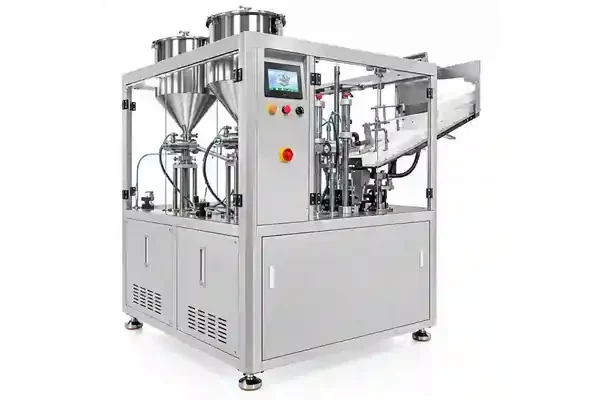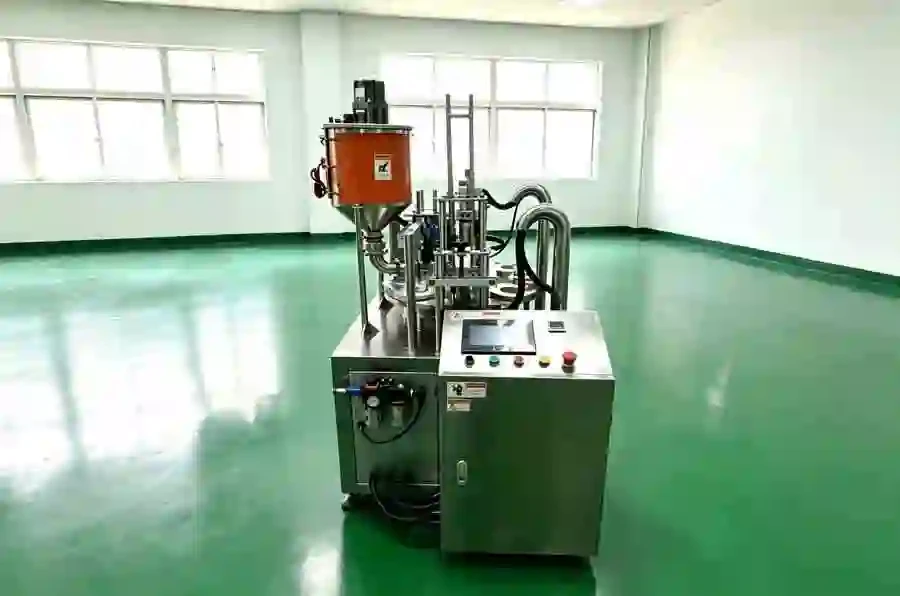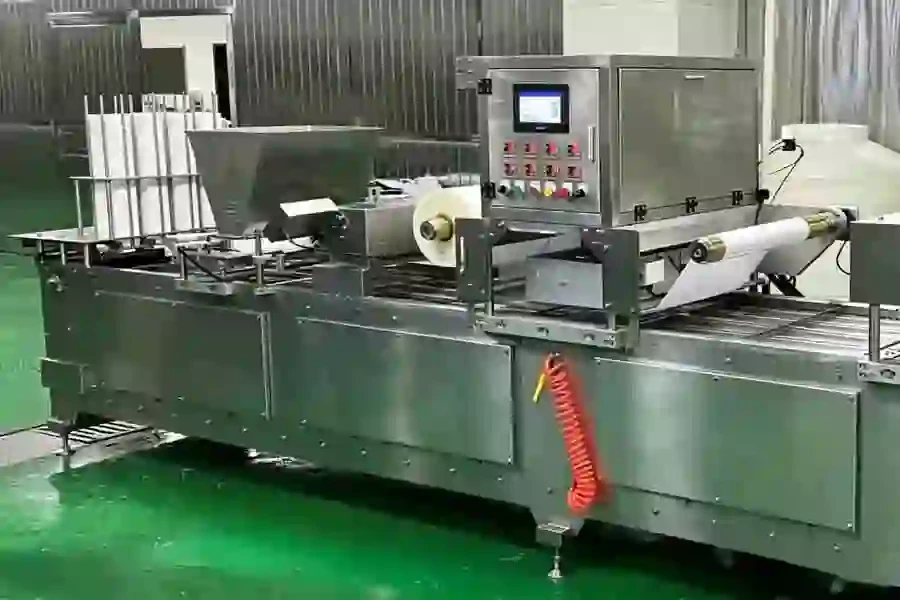
In the increasingly competitive packaging industry, labeling machines have become vital; they ensure precise application—free of wrinkles and air bubbles—guarantee a consistent visual appearance for products, and enhance a company’s brand image.
This guide provides a detailed overview of labeling machines—covering their definition, working principles, features, components, and more—to help business owners gain a comprehensive understanding of these machines, select the right equipment, and boost overall production efficiency.
What Is a Labeling Machine?
labeling machine is a device used to apply labels (such as self-adhesive labels, cold glue labels, and shrink sleeve labels) to containers, bottles, jars, tubes, and other products. It enables precise labeling on various positions, including single-side, double-side, three-side, top, and bottom labeling. Labeling machines are suitable for round bottles, flat bottles, cartons, wires, and many other items. They can also be integrated with filling machines, capping machines, and other packaging equipment to form a complete production line, greatly improving production efficiency.
Types of Labeling Machines
There are many types of labeling machines on the market, such as self-adhesive, double-sided, and round-bottle labeling machines. The following classification categorizes them based on two dimensions: labeling method and labeling function.
1. Self-Adhesive Labeling Machine
Self-adhesive labeling machines use a peeling blade to separate adhesive-backed labels from their backing paper and apply pressure to affix them to the product surface. This is currently the most common labeling method, widely used across various industries. Based on function, these machines can be further categorized into round-bottle, double-sided, flat-surface, and top/bottom labeling machines.
2. Wet Glue Labeling Machine
Also known as a cold glue labeling machine, this is a traditional packaging machine that uses paste (glue) as the adhesive to attach paper labels to packaging containers. It significantly improves labeling efficiency and quality by automating processes such as label feeding, glue application, label placement, and label pressing.
3. Hot-Melt Glue Labeling Machine
A hot-melt glue labeling machine is an automated device that uses hot-melt adhesive to apply labels to various types of containers with high speed and precision.
4. Sleeve Labeling Machine
Heat-shrink sleeve labeling machines apply film sleeves made of materials such as PVC, PET, or OPS to products. They utilize heat-shrink technology to ensure the label fits perfectly, achieving 360-degree coverage and delivering an excellent visual effect.
What Are the Features of a Labeling Machine?
High Precision
By utilizing accurate positioning and control systems, automatic labeling machines can guarantee that labels are affixed to the designated locations on products or packaging with high precision. This minimizes the frequency of labeling mistakes and guarantees the uniformity and standardization of product labels.
Versatility
Automatic labeler machine can be modified for various product shapes, sizes, and labeling needs by adjusting the mechanical framework and control system. This allows them to fulfill the labeling requirements of different sectors and products, offering adaptable labeling options. From cylindrical bottles to flat surfaces, the flexibility of modern machines enables seamless transitions between product types, supporting industries ranging from food and beverages to cosmetics and pharmaceuticals.
Easy-to-Use Operation
Contemporary automatic labeler machine feature user-friendly interfaces and control systems. Operators can effortlessly establish and oversee processing settings, modify machine operations, and diagnose issues using touch screens or computer controllers. This streamlines the operational process and lessens the learning curve for operators.
Cost-Efficient
While the upfront expense for automatic label machine might exceed that of manual labeling, they can greatly decrease labor expenses and labeling mistakes over time. They also enhance production efficiency and product quality, which can lead to increased economic advantages for businesses.
What Are the Key Components of a Labeling Machine?
The main components of a label applicator machine typically include:
1.Conveying System
This system precisely moves products or packaging from the initial location to the labeling area. Conveyor belts, sensors, and motors control the speed and direction of the conveyor belts.
2.Label Feeding System
A label feeding system that supplies labels and conveys them to the labeling position. It generally includes label rolls, tension control devices, and label conveying devices, ensuring accurate label feeding by controlling the feeding speed and tension of the labels.
3.Adhering System
An adhering system, which is the core component, accurately attaches labels to products or packaging through mechanical structures and the control system. The adhering system usually includes an adhering head, pressure device, and positioning device, controlling the movement and pressure of the adhering head to achieve accurate label attachment.
4.Control System
A control system that serves as the brain of the industrial labeling machine. It usually consists of a computer controller or programmable logic controller (PLC), setting and controlling processing parameters such as label size, adhering position, and speed. The control system enables automated control of label attachment, enhancing the efficiency and accuracy of labeling.
How Does a Labeling Machine Work?
1.Feeding and Spacing
Bottles are manually placed onto the conveyor belt. A spacing mechanism separates the bottles at fixed intervals and conveys them sequentially toward the labeling unit.
2.Sensing and Signaling
When a bottle reaches the labeling position, a sensor detects it and sends a signal to the controller. The controller calculates the timing and prepares for the next action.
3.Label Peeling
Upon activation, the drive wheel pulls the label web from the supply roll. As the web passes over the peeling edge, the label separates cleanly from the backing paper without jamming.
4.Label Application
Once separated, the label is applied to the bottle via rolling, vacuum suction, or air-blowing. The process accommodates various bottle shapes while ensuring accurate label placement.
5.Pressing and Inspection
Brushes or rollers press the label firmly in place, ensuring a smooth finish free of bubbles or lifting edges. A sensor simultaneously checks for alignment, allowing for the timely detection of errors and a reduction in waste.
6.Collection and Output
The labeled bottles are collected and moved to the next stage of the production line or removed manually.
Labeling Solutions – Based on Your Products
1.Round Bottle Labeling Machine

If your product is cylindrical and requires wrap-around or semi-wrap labeling, round bottle labeler machine is the most suitable labeling solution.
2.Two Sides Labeling Machine
If your product comes in square, flat, oval, or similar bottle shapes and requires single-side or double-side labeling, double-side labeler machine is the most suitable labeling solution.
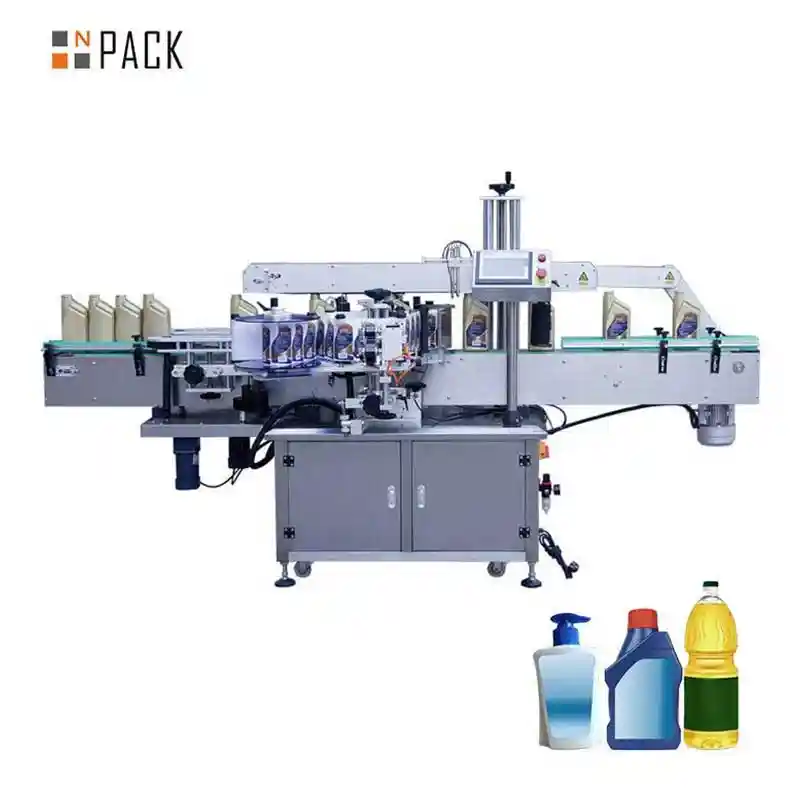
3.Plane Labeling Machine
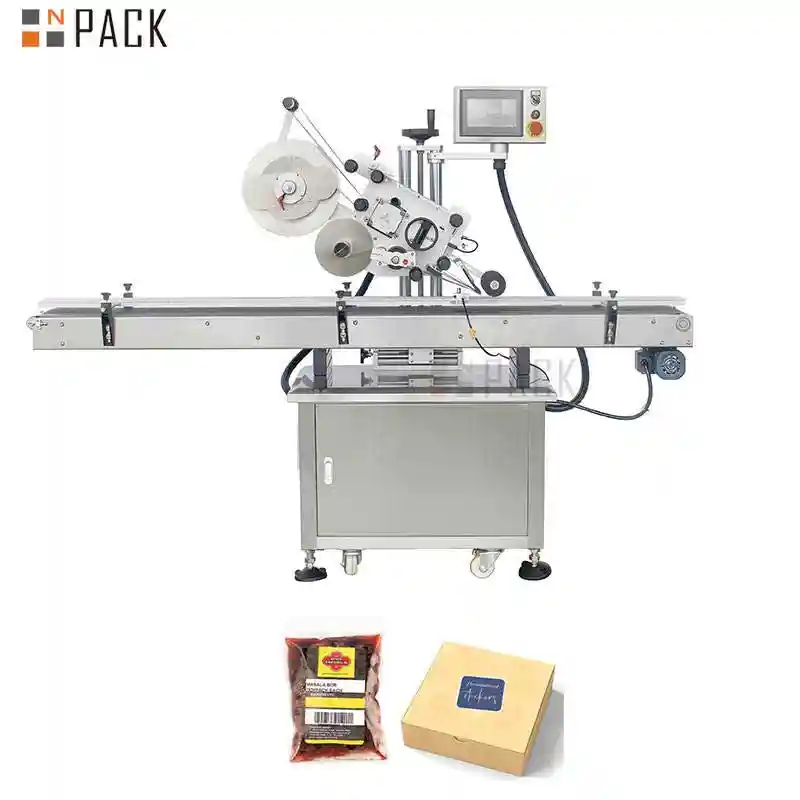
If your product comes in cartons, boxes, bags, or similar packaging and requires surface labeling, flat labeler machine is the most suitable labeling solution.
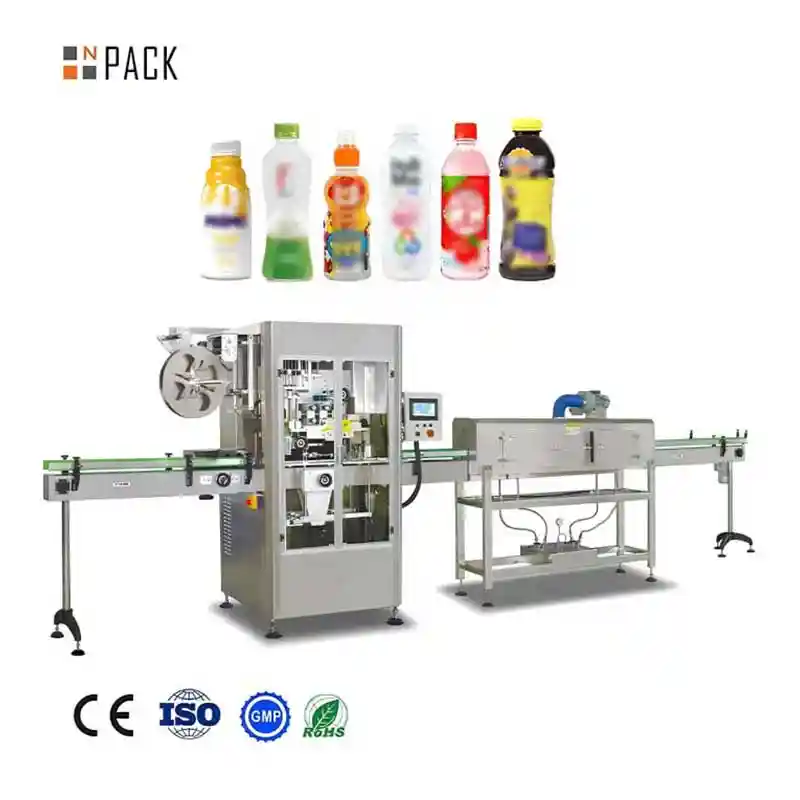
4.Shrink Sleeve Labeling Machine
If your product comes in beverage bottles, energy drink cans, or similar containers and requires labeling that conforms to the product’s contours while maintaining a consistent visual appearance, a shrink sleeve labeler machine is the most suitable labeling solution.
5.Horizontal Labeling Machine

If your product comes in lipstick tubes, ampoules, or other small round containers that cannot stand upright easily, a horizontal labeling machine is the most suitable labeling solution.
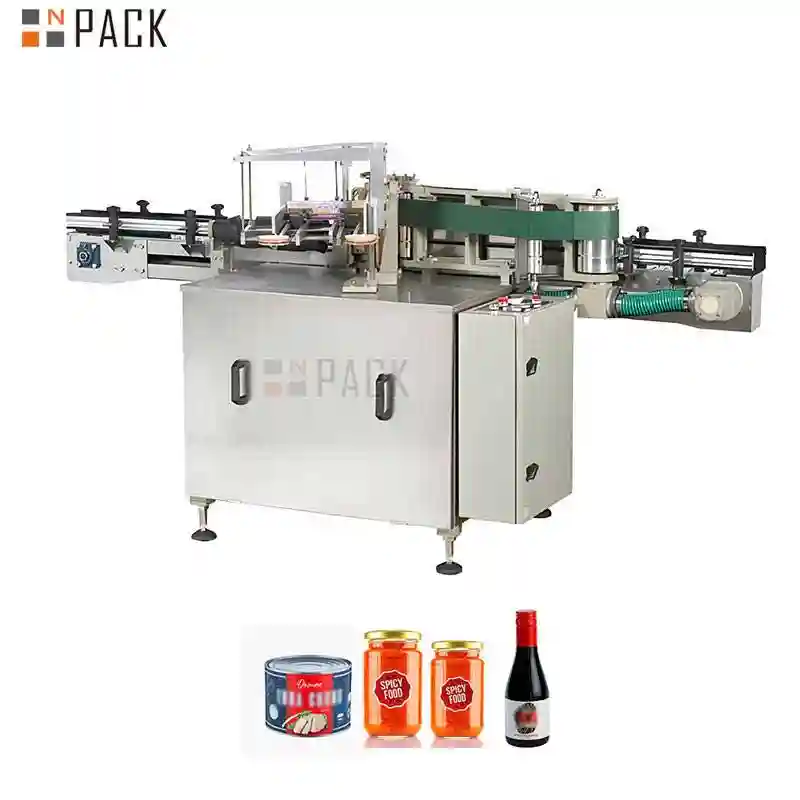
6.Wet Glue Labeling Machine
If your product is packaged in beer bottles, cans, or similar containers and uses paper labels, a cold glue labeling machine is the most suitable labeling solution.
FAQ About Labeller Machine
1.Can label application machine be integrated into existing production or packaging lines?
Yes, labeller machines can be integrated into existing production lines. They can work together with filling machines, capping machines, and other packaging equipment to form a complete production line, improving production efficiency.
2. Can labeling and printing be performed at the same time?
Yes. labeler machine can be equipped with printing label modules, thermal transfer modules, or laser coding systems to print dates, batch numbers, or barcodes in real time during the labeling process.
3.What industries are label application machine typically used in?
Labeler machine are highly versatile and can be applied across various industries. The following are the most common application sectors:
- Food and beverage industry
- Pharmaceutical industry
- Cosmetics manufacturing industry
- Daily chemical industry, and more
4.How to maintain a label application machine?
- Regularly clean the sensors of the labeler machine. Do not apply excessive force during cleaning.
- Clean the cutting blade, as dirt may accumulate on it and affect labeling accuracy.
- Regularly clean the print head to ensure labels are printed neatly and with high quality.
5.What factors should be considered when purchasing a label application machine?
Every company has different products, and the requirements for label application machine also vary. Selection should be based on actual conditions, and the following factors should be considered:
- Product shape
- Product size
- Label size
- Labeling speed
- Budget, etc.
We provide comprehensive labeling solutions, from design and production to installation and after-sales service.