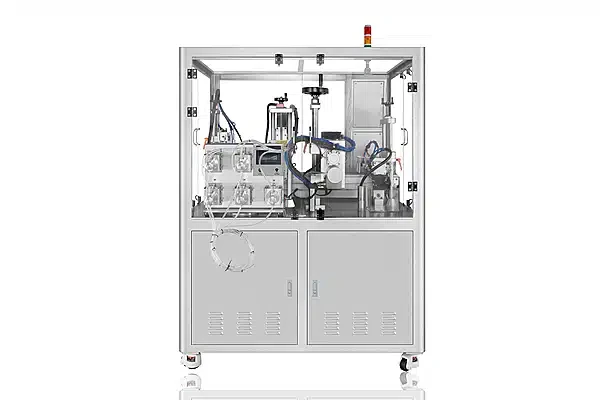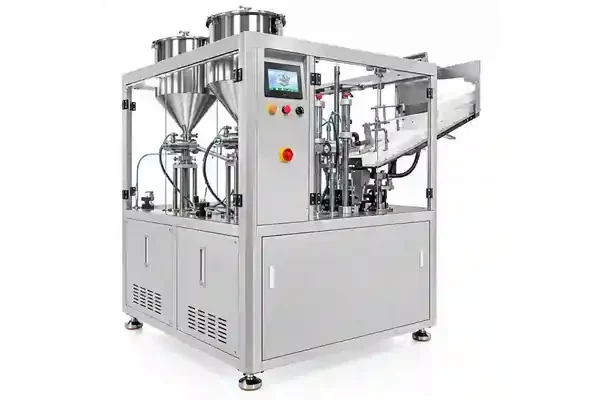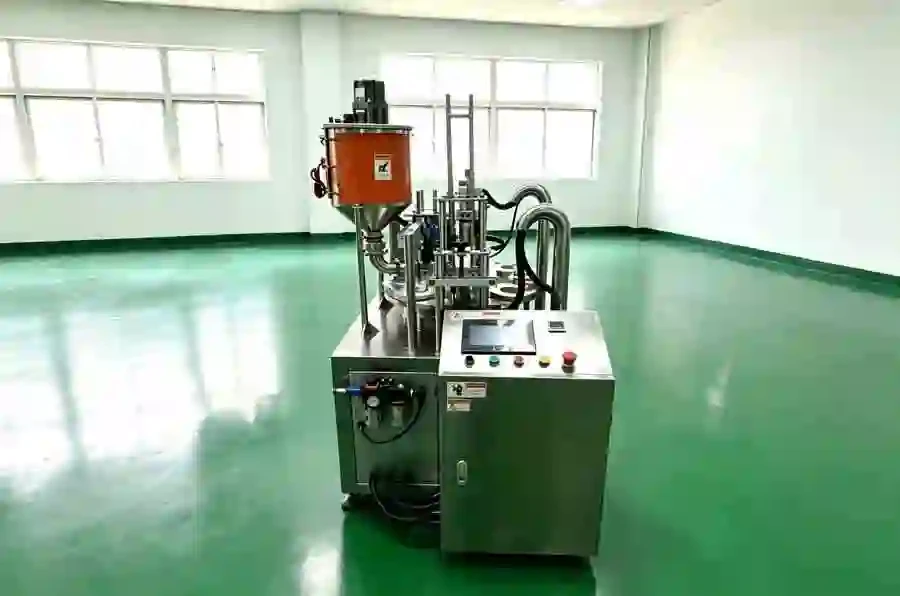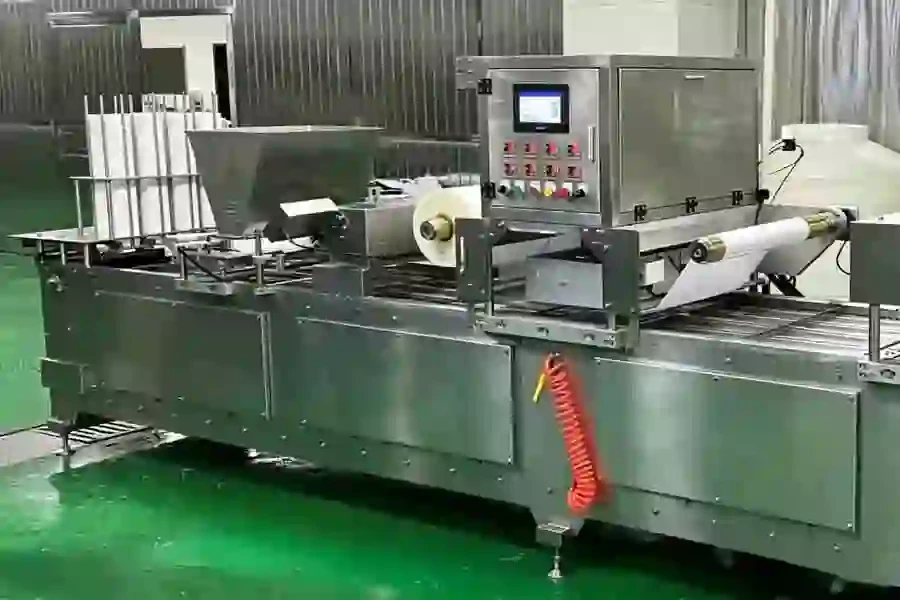
Shrink sleeve labeling machine has become an essential equipment in modern packaging production lines, widely used in beverages, energy drinks, sauces, personal care products, and household chemical products. This packaging method significantly enhances product presentation by delivering a vibrant, attractive, and consistent visual appearance. As the demand for shrink sleeve packaging continues to grow, the importance of shrink sleeve labeling machines in automated production has also increased.
In this guide, Npack will introduce the definition, types, working principles, and other key aspects of shrink sleeve labeling machines.
What Is a Shrink Sleeve Labeling Machine?
Shrink Sleeve Labeling Machine utilizes heat-shrink technology to apply shrink sleeve labels made from materials such as PVC, PET, and OPS tightly around the bottle neck or bottle body. It is suitable for a wide variety of container shapes, including round, square, flat, curved, and cup-shaped bottles, providing a secure fit and an attractive, full-body labeling appearance.
Types of Shrink Sleeves
There are various types of shrink films available on the market, with the most common being PVC Shrink Film, PET Shrink Film, OPS Shrink Film, and PE Shrink Film. Each material offers distinct advantages and limitations, which are discussed in detail below.
1.PVC Shrink Film
PVC shrink film is one of the most cost-effective and widely used options. It is available in two types: cast and blown film. It offers a moderate shrink ratio, good transparency, and excellent rigidity, with a mature production process and low cost. However, its environmental performance is poor and it is difficult to recycle.
2.PET Shrink Film
PET Shrink FilmPET shrink film is an environmentally friendly and recyclable material. It offers high gloss, good rigidity, and excellent clarity, making it well-suited for full-body shrink sleeve applications on irregularly shaped containers. However, its cost is relatively high
3.OPS Shrink Film
OPS shrink film has good gloss and transparency, but its rigidity is weaker and the material is relatively brittle, making it prone to cracking. It also has a shorter storage life.
4.PE Shrink Film
PE shrink film offers good flexibility, tear resistance, and moisture resistance. However, its low shrink ratio makes it less suitable for shrink sleeve applications on complex bottle shapes.
Types of Shrink Sleeve Labeling Machines
Semi Automatic Shrink Sleeve Labeling Machine
The operator manually places the bottle into the shrink tunnel, where the sleeve is shrunk and secured using either electric heating or steam.
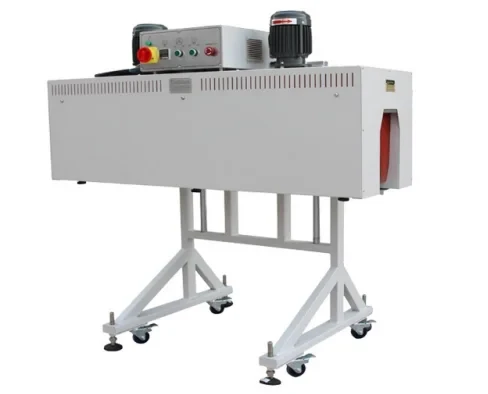
Full Automatic Shrink Sleeve Labeling Machine
Bottles are automatically conveyed to the labeling station, where the sleeve is fed, cut, and applied before entering the heat shrink tunnel (electric or steam heated). The entire process is controlled by a PLC system with no manual intervention required, ensuring consistent packaging quality and making it ideal for high-volume production.
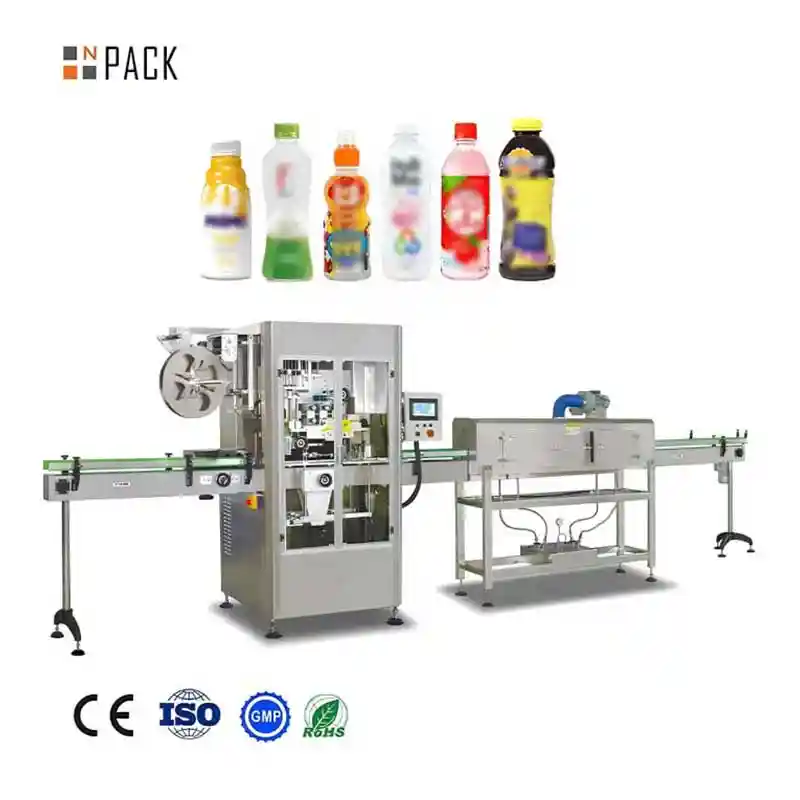
What Are the Different Sleeve Types?
Full-body sleeves
This type of packaging completely covers the product and is commonly found in the food and beverage industry, creating a unified visual effect.
Neck sleeves and tamper-evident sleeves
These securely seal the product and are commonly found in health supplements and cleaning products.
Combination and multi-pack sleeves
These hold several products together, identified by a single barcode, and are commonly found in cleaning supplies and beverage products.
Standard sleeves
Also called partial packaging sleeves, these cover most of the product but do not have tamper-evident seals. They are commonly found in juice and bottled water products.
What Are the Components of a Shrink Sleeve Labeling Machine?
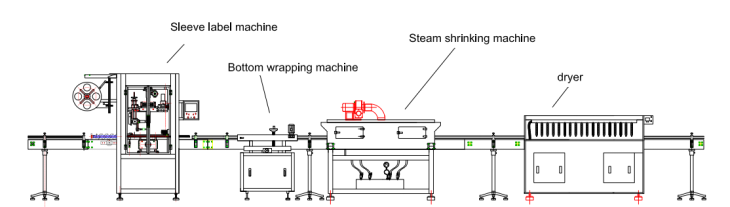
1.Main frame: The shrink sleeve labeling machine body adopts stainless steel steel beam structure, and the movable wheel seat is arranged for supporting the main body and the fixed conveyor belt.
2.Shrink furnace (electric or steam): shrink sleeve labeling machine Use the heat of the electric or steam to shrink the shrink film into the bottle and attach it to the bottle evenly.
3.drive group: The use of adjustable single-group mechanism to drive, step by step or servo motor to control the transmission of the shrink film to do the size of the transmission
4. Sub-bottle Screws: Will be feeding to the standard bottle of the bottle, the use of screw fixed distance transport, so that the bottle can be equidistant to facilitate the tag into the set.
5.bottle brush group: Using both sides of the synchronous drive, the height and folder bottle can be adjusted, the purpose of the bottle in the transport does not shake and set the height of the label, and then help to rotate the brush to pull the label film to the positioning point.
6.Center guide column: The label membrane material into the distraction, so that the film can be transported and cut.
7.Tag Control Eyeglass: Use the optical tag to send the signal, to provide the control system to do the size of the delivery, according to the location of the high and low adjustment, to determine the level of cutting the file material and cutting position.
8.Brush Group: Using the motor drive mechanism, the two sets of brush under the transmission to adjust the adjustment to the center column below the roller slightly contact, to be through the label when the higher speed, the label into the bottle.
9.Shelf group: The fixed paper ring of the label film can be adjusted and set, and the material is fed from the straight knot motor at the rear of the feed roller group.
10.bottle of electric eye: Monitor the bottle to travel to the appropriate position of the output signal, so that the host automatically set the label.
11.electrical control box: For the control center of the machine, with the simple easy to learn the operation panel, auxiliary number of knobs, buttons and set the keyboard, to operate the control sleeve label operations.
What is the Working Process of a Shrink Sleeve Labeling Machine?
1.Product Feeding
Bottled products are conveyed forward by a slat chain conveyor and enter the shrink sleeve labeling machine production line.
2.Separation and Alignment
The bottle separation mechanism spaces adjacent bottles apart and aligns their positions to ensure consistent orientation.
3.Photoelectric Detection
A photoelectric sensor detects when a bottle reaches the designated position and sends a trigger signal.
4.Label Cutting
Upon receiving the signal from the photoelectric sensor, the sleeve labeling unit performs the label cutting action, separating an individual label sleeve.
5.Sleeve Application
The cut label sleeve is rapidly positioned and transferred above the product, accurately covering the designated area of the bottle.
6.Label Position Adjustment
The applied sleeve is fine-tuned on the bottle to ensure accurate placement and prevent misalignment.
7.Heat Shrinking
The bottle enters the heat shrink tunnel (electric heat shrink or steam shrink). The sleeve is evenly heated and shrinks tightly around the bottle surface, creating a smooth and secure fit.
What Are the Key Differences Between Electric Heat Shrink Tunnels and Steam Shrink Tunnels?
There are two common shrink methods used in the market: electric heat shrinking and steam shrinking. Each has its own characteristics and advantages.
1.Electric Heat Shrinking
Provides uniform shrinkage in localized areas, allowing the sleeve label to fit tightly against the container surface for an excellent finished appearance.
2.Steam Shrinking
Delivers uniform shrinkage over larger surface areas, enabling the sleeve label to conform closely to the container shape and achieve a high-quality finish.
Shrink Sleeve Labeling Machine Case Study
Labeling Product: detergent
Sleeve Types: Full-body sleeves
Bottle Type: detergent bottle
Labeling Solution:
Based on the characteristics of the detergent bottles and the full-body sleeve labeling requirements of a customer in Russia, Npack customized a shrink sleeve labeling machine equipped with a steam shrink system. This solution effectively eliminated uneven shrinkage issues and significantly improved the customer’s production efficiency.
How to Maintain a Shrink Sleeve Labeling Machine?
1.Lubrication
- Guide column, guide rail, screw, slide, bearing and other sliding surface, please every two weeks on a lubricant, you can use the cycle oil R32, or equivalent level VG32 of his brand of lubricants.
- Gear oil once a week, the use of general machinery with grease (cold zone, please use antifreeze grease) before oil, please clean the soft step to remove the old oil.
- If there are obvious foreign body pollution, such as: dust, iron, water, etc., should be immediately removed and then on the oil.
- Mechanical parts in the usual point of detection found rust and rust, should be done immediately after the rust treatment or anti-rust oil.
- Please maintain the surface cleanliness of the machine, to avoid the irrelevant items placed on the machine. Every week should check whether the rotation of some of the belt is broken or serious damage, please reserve the goods to be replaced.
- Please make your own maintenance of the relevant maintenance form, on time maintenance and records.
2.Daily routine checkpoints:
- Before starting, check the relative position of the blade with the center guide ring groove and the blade belt tightness.
- Before starting, please confirm that the drive position on both sides of the center guide column is correct? Drive wheel is Is it fixed?
- Make sure that the lower edge of the brush is the same as the center of the center of the center guide column and is touching the wheel. Make sure that there is a foreign matter on the conveyor belt. Please remove it.
- To confirm the location of the label on the shelf material is correct, the film with or without deformation.
- Make sure that the center of the label film on the rack is equivalent to the center of the center guide column, otherwise the tray position should be adjusted.
- Check whether the height of the center of the main head of the main head is the production condition of the bottle.
- To confirm the positioning of the belt with the belt, holding the bottle position and clamping pressure should not be too tight.
- Make sure that the center of the bottle bottle is in the center of the center pillar.
- Make sure that the belt is held in the belt of the belt and the speed of the conveyor is coordinated with the conveyor speed.
- Make sure the position of the bottle is correct, please test the label before production.
- To confirm the installation of safety protection frame of the machine, safety switch is activated.
If the operation is completed, please turn off the electric heating switch of the shrink furnace and keep the fan cooling for at least 10 minutes before turning off the fan switch and power switch. Finally, in accordance with Chapter 8 of the electrical control box 8-1-2 shutdown sequence steps, and finally turn off the main power supply.
Why Choose Npack?
1. Over 15 Years of Industry Experience
Npack has more than 15 years of experience in the design and manufacturing of filling, capping, and labeling machines, providing reliable solutions for a wide range of industries.
2. Comprehensive Service and Technical Support
We offer a complete service system, including 24/7 online technical support and overseas after-sales service, ensuring prompt assistance whenever needed.
3. Certified Quality Assurance
All of our machines are manufactured to high-quality standards and comply with international certifications, including CE and RoHS, ensuring reliable performance and product safety.
4. Customized Turnkey Solutions
We tailor equipment designs to meet each customer’s specific production requirements and factory layout. From equipment selection to complete production line integration, we provide a one-stop packaging solution.
FAQ about Shrink Sleeve Labeling Machine
| Problem | Solution |
| 1.in the production, the shrink sleeve labeling machine running at the center of the guide column, easy to check how to solve the label? A. The label is too small or too large. B. Cutting blade tip wear. C. Center column knife knife ditch has a residual label, affecting the bid. D. Center pillar clamp is not correct. | A. The diversion failed to meet the standard diversion tolerance. B. Replace the blade. C. Remove the debris from the non-metallic tool, or remove the air gun. D. Check the clamping tightness, guide wheel contact tightness, brush the next wheel clamping tightness. |
| 2.bottle into the sleeve position, set the label when the label is too early to ask how to solve? according to the bottle sensor, exposure bottle position (before and after) wrong. | The phenomenon is that the bottle travels faster than the label, so the sensor moves to the left, the early subscript (otherwise the opposite). |
| 3.bottle into the sleeve position, set the label when the label is too slow to find how to solve? according to the bottle sensor, the bottle irradiation point is not good. | sensor irradiation bottle, with a large area of the flat is better. |
| 4.What should I pay attention to when replacing shrink film? the solution: | A. Check that the diameter of the break is within the standard tolerance. B. Whether the feed roller is closed, hold the label. C. Whether the label is worn |
| 5. label cut off, cut the location is not in the middle of the transparent, how to solve? A. The label can not catch down. B. The transparency of the label is long or short. | A. Need to adjust the fiber optic sensor (normal standard label factory has been adjusted). (Refer to manual operation) B. Adjust the eyepiece rack to rise or fall (according to the demand for the amount of self). |
| 6. steam oven open, the steam is not mist, how to solve? A.Steam pressure is too high. B. There are too many holes in the blown pipe. | A need to add pressure relief valve, down the pressure below 4kg. B plug in excess holes. |
| 7.bottle by steam shrink, there is still a little wrinkle, how to solve? Blow pipe hole blowing to the bottle before and after the height, distance from the wrong position. | Adjust the trachea before or after the upper and lower position. |
| 8. sets of standard cut to the label with color segment, or continuous delivery of different lengths, how to solve? | Please adjust the fiber eye (FX-301)FX-301 fiber optic eye adjustment steps: |