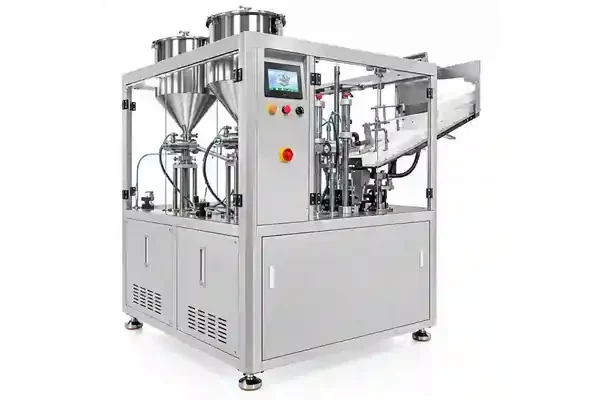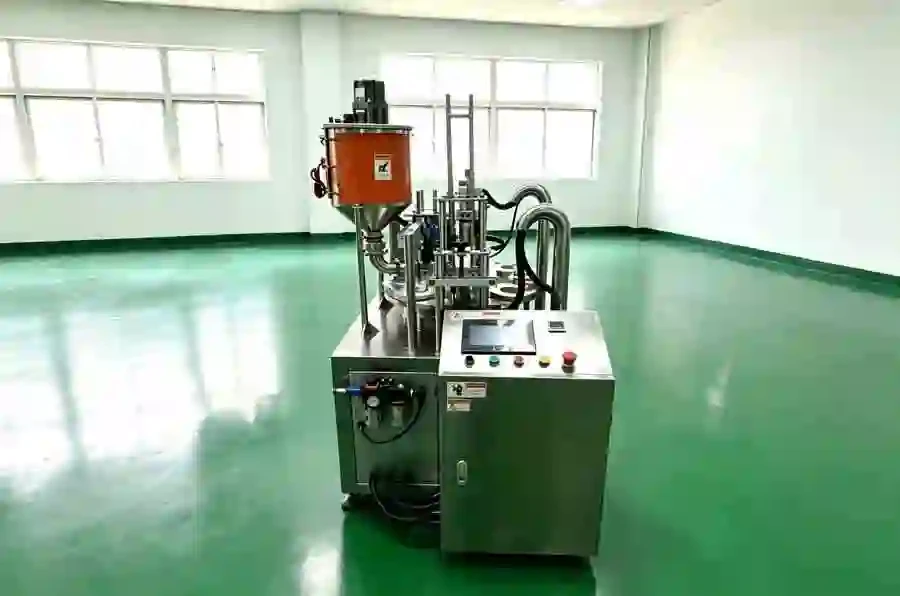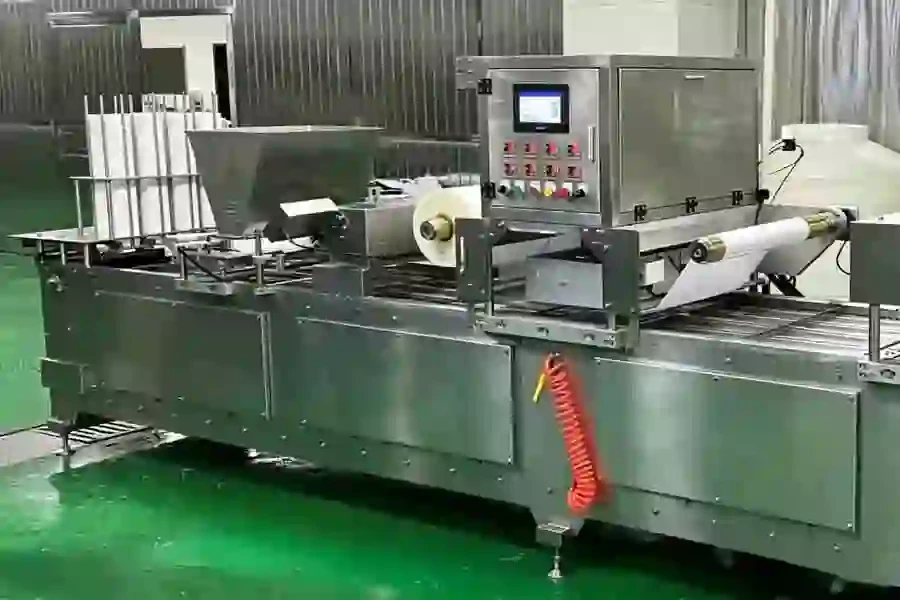
What Is a Dual-Chamber Tube Filler Sealer Machine?
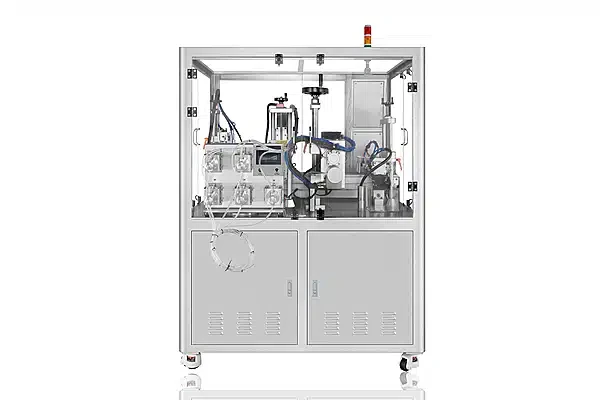
The dual-chamber tube filler sealer machine is designed to fill two different formulations into separate compartments within the same tube and then complete the sealing, coding, trimming, and discharge process. It is commonly used for products that need to keep two formulas separated during storage but dispense them together when the consumer uses the product.
Depending on the packaging structure, this type of tube may also be called a dual-compartment tube, tube-in-tube, double-chamber tube, two-component tube, dual-formula tube, or A+B tube. Although these terms are sometimes used interchangeably, the internal structures can be very different, so the filling machine must be matched to the actual tube design.
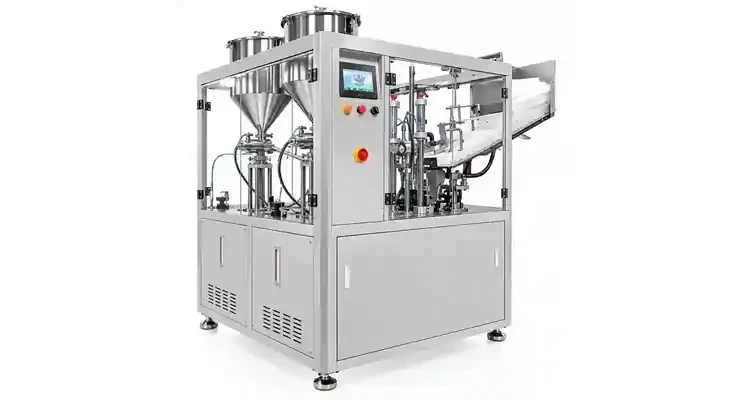
Why Are Dual-Chamber Tubes Used?
Some ingredients should not be stored in the same chamber for a long period. They may chemically interact, decrease their stability, alter color or viscosity, or lose their intended performance over time. The two formulas can be kept separate until the time of use to help maintain product stability and functionality.
Dual-chamber packaging also enables brands to combine two complementary functions in one package. Typical concepts include treatment and moisturizer, active ingredient and activator, cleanser and serum, color and developer or two toothpaste formulas with different functions.
Dual-chamber tubes also offer a more unique user experience and better product differentiation from traditional single-formula squeeze tubes for premium cosmetics and personal care products.
How Does a Dual-Chamber Tube Work?
A conventional squeeze tube contains one internal compartment. A dual-chamber tube contains two separate product chambers. Depending on the design, the two chambers may be arranged in a tube-in-tube structure, a side-by-side structure, or another customized configuration.
For example, Formula A may be stored in an inner tube while Formula B is stored in the surrounding outer chamber. When the consumer squeezes the package, both products are guided through the dispensing system and released together or according to a designed ratio.
Because tube structures vary considerably, the tube sample should normally be finalized before the filling and sealing system is configured.
How Does a Dual-Chamber Tube Filler Sealer Machine Work?
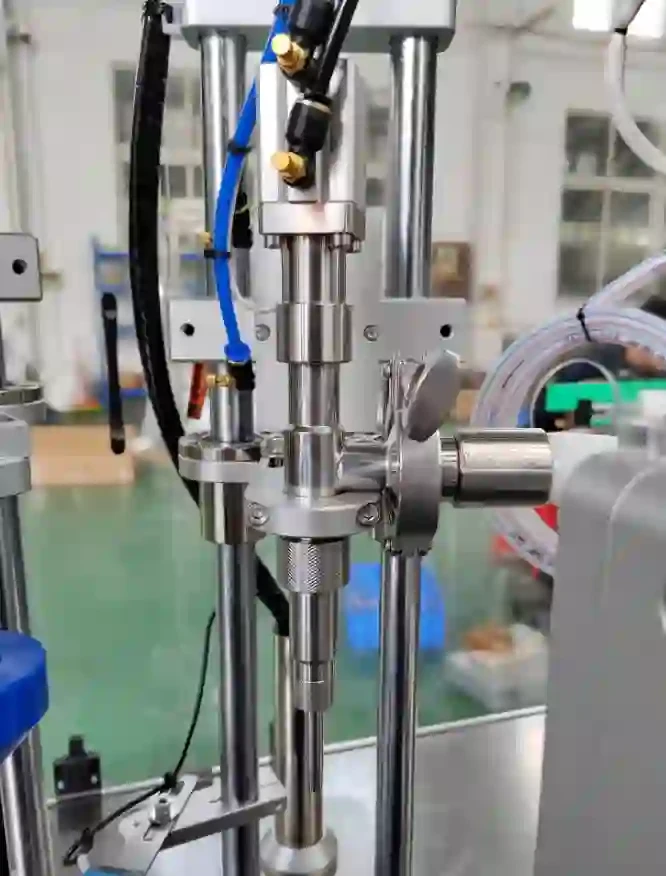
Unlike a normal tube filler with one product pathway, a dual-chamber tube filler sealer machine will normally require two independent product feeding and dosing systems. Each formula must go into the correct chamber without any unwanted mixing or cross contamination.
A typical automatic production sequence could be:
Tube loading → tube positioning → registration mark detection → Formula A filling → Formula B filling → sealing → batch coding → trimming → finished tube discharge
Depending upon the tube design , Formula A and Formula B may be filled at separate stations . The exact configuration should be chosen according to the tube structure, product properties, filling ratio and desired output.
What Products Can Be Filled?
Dual-chamber tube filler sealer machines are found in cosmetics, personal care, oral care, pharmaceutical, healthcare, and specialty chemical applications.
Typical products are: facial creams, lotions, gels, toothpaste, whitening products, hair color products, conditioners, ointments, adhesives and other two-component formulations.
But the product name should not be the only factor in determining the machine compatibility. Two creams may behave very differently when being filled because of differences in viscosity, density, temperature sensitivity, particles, foaming tendency or stringiness.
Therefore, it is strongly recommended to do actual product testing before the final machine configuration is confirmed.
Why Are Independent Filling Systems Important?
Formula A and Formula B can be different in viscosity, density, filling volume and flow characteristics. This is the reason why a dual-chamber machine will normally use independent dosing systems, allowing each formula to be adjusted independently.
The required filling ratio may be 1:1, 1:2, 1:3 or any other custom ratio, for example. It is difficult to keep a stable ratio if the two formulas cannot be controlled independently.
Servo-controlled piston filling systems are often used for creams, pastes and gels, because the fill volume of each formula can be set independently. Other pump technologies may be more suitable for lower viscosity or specialty products.
Filling Accuracy: Total Weight Is Not Enough
Buyers of dual-chamber filler sealer machines are usually concerned about the overall filling accuracy. However, ratio consistency between Formula A and Formula B is equally important for a two-component product.
For example, the total tube weight may be within tolerance, but Formula A is overfilled, and Formula B is underfilled. The total weight could still be acceptable for inspection even if the actual formulation ratio is wrong.
So a reliable system should be tested on the individual filling accuracy as well as the consistency of the A/B ratio.
Ultrasonic Sealing or Hot-Air Sealing?
The right sealing technology depends on the tube material, wall structure, internal chamber design and production requirements.
Ultrasonic sealing is often considered for many plastic dual-chamber and tube-in-tube applications. It creates localized heat in the sealing area by using high-frequency mechanical vibration and can achieve controlled sealing for some complex plastic tube structures.
Hot-air sealing is widely used for conventional laminated tubes and is well established for high-speed tube packaging lines. But a dual-chamber tube can be more complex inside than a standard tube.
Consequently, the sealing method should be optimally verified by actual tube testing and not by nominal tube material alone.
Production Speed: Look Beyond Tubes per Minute
Machine speed is an important purchasing factor, but the maximum number shown in a brochure does not always represent real production output.
Actual output can be influenced by product viscosity, filling volume, filling ratio, tube design, filling time, sealing time, cooling requirements, operator intervention, and upstream or downstream automation.
A machine filling a low-viscosity product at a small volume may operate much faster than the same machine filling a large quantity of high-viscosity cream.
For this reason, buyers should ask for realistic production data based on their actual tube and product rather than relying only on theoretical maximum speed.
Cleaning and Product Contact Parts
In cosmetics, oral care, pharmaceutical and personal care production, cleaning is especially important when the same machine is used to produce different colors or formulas.
Product-contact parts should be designed for easy access, disassembly, cleaning, and reinstallation. The hoses, seals, filling cylinders, tanks and nozzles should be selected according to the actual formulation characteristics.
Less residual product in the filling pathway can also reduce cleaning time, cross-contamination risk and product waste during changeovers.
Final Thoughts
dual-chamber tube filler sealer machine is not just a standard tube filling machine with an additional nozzle.
Before selecting a machine, the buyer should first ensure four basic points, namely the tube structure, the characteristics of Formula A and Formula B, the filling ratio required, and the target production capacity.
Once these factors are known, the filling technology, sealing method, machine tooling and automation level can be configured much more accurately.
Planning a Dual-Chamber Tube Filler Sealer Machine Project?
If you are developing a dual-chamber tube, tube in tube or two-component tube packaging project, please send us your tube samples and product information for technical evaluation.
Please provide the tube dimensions, tube material, the filling volumes for Formula A and Formula B, the target filling ratio, the viscosity of the product, the required production speed and the factory power supply.
The actual packaging and formulation for your production requirements can then be used to select the filling system, sealing technology, tooling and automation configuration.