Selecting a lubricant filling machine requires more than comparing filling speed, nozzle quantity or nominal accuracy.
Lubricant packaging involves several closely connected processes. Product viscosity affects filling speed. Container geometry affects nozzle selection and bottle handling. Filling cleanliness influences capping and labeling. Downstream equipment determines whether the rated capacity of the filler can be achieved as actual line output.
For this reason, lubricant filling equipment should be evaluated as part of an integrated packaging system.
A typical lubricant packaging line may include:
Bottle Feeding → Filling → Capping → Induction Sealing → Labeling → Coding → Inspection → Packing
The appropriate configuration depends on the lubricant, container format, required output,factory layout and level of automation.
Which Lubricant Properties Affect Filling Machine Selection?
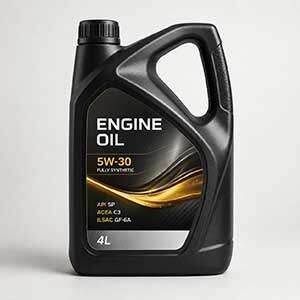
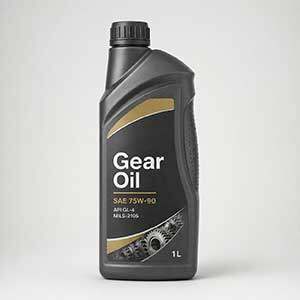
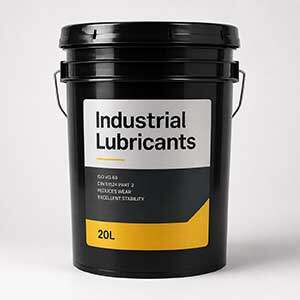
Viscosity is one of the primary factors in lubricant filling machine selection.Engine oil, hydraulic oil, gear oil and industrial lubricants can have significantly different flow characteristics. Viscosity may also change with product temperature and ambient conditions.
| Lubricant Type | Viscosity Range | Filling Characteristics |
| Engine Oil | 40–120 cSt | Medium viscosity; requires stable flow control and accurate dosing. |
| Hydraulic Oil | 28–75 cSt | Low to medium viscosity; good fluidity and suitable for high-speed filling. |
| Gear Oil | 100–450 cSt | High viscosity; requires stronger pumping capacity and controlled filling speed. |
| Industrial Lubricants | 28–750+ cSt | Wide viscosity range; filling configuration should be selected according to the specific lubricant grade. |
These variations directly affect:
- filling speed;
- pump selection;
- nozzle diameter;
- dosing stability;
- pressure requirements;
- machine cycle time.
A filling system designed for a lower-viscosity hydraulic oil may require different parameters when processing a heavier gear lubricant.
For plants producing multiple lubricant grades, the complete viscosity range should be defined during the engineering stage.
Depending on the application, suitable filling technologies may include:
- servo gear pump filling;
- servo piston filling;
- net weight filling;
- compatible flow meter filling systems.
The correct filling principle should be selected according to product properties, container size, target accuracy and production capacity.
How Does Container Design Affect Lubricant Filling Performance?
Container design can have a direct impact on lubricant filling machine speed and line stability.
Key container parameters include:
- bottle height
- neck diameter
- bottle width
- container shape
- handle position
- material
- bottle rigidity
For this reason, actual bottle samples or accurate dimensional drawings should be evaluated before machine manufacture.
This allows the lubricant filling machine to be configured with the appropriate nozzle size, filling height, conveyor width and bottle positioning system.
Why Is Anti-Drip Performance Important in Lubricant Filling Machine?
Dripping can affect more than equipment cleanliness.
Lubricant residue around the bottle neck may interfere with cap placement or induction sealing. Oil on the bottle surface may also reduce pressure-sensitive label adhesion.
Effective anti-drip control therefore protects multiple stages of the packaging process.
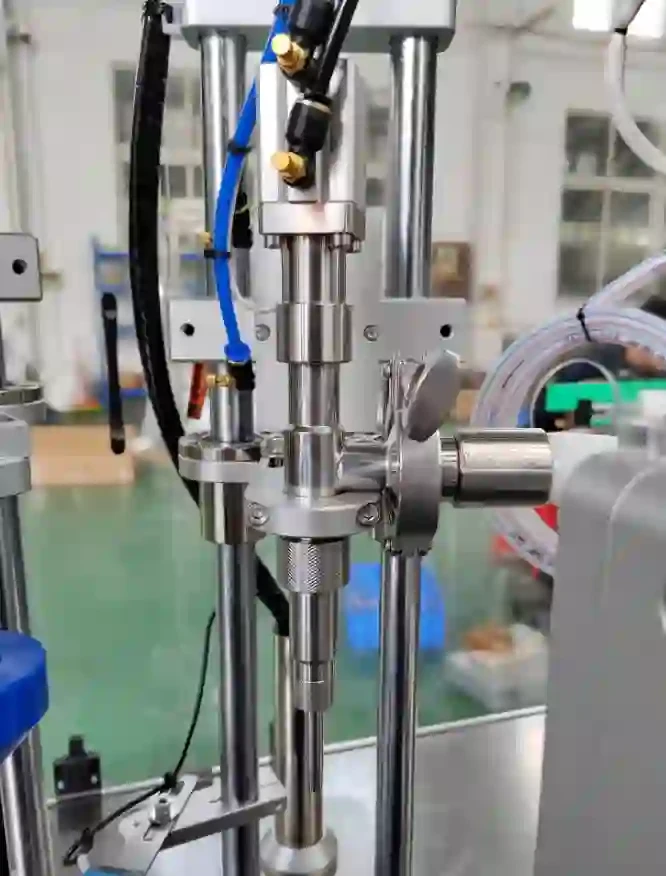
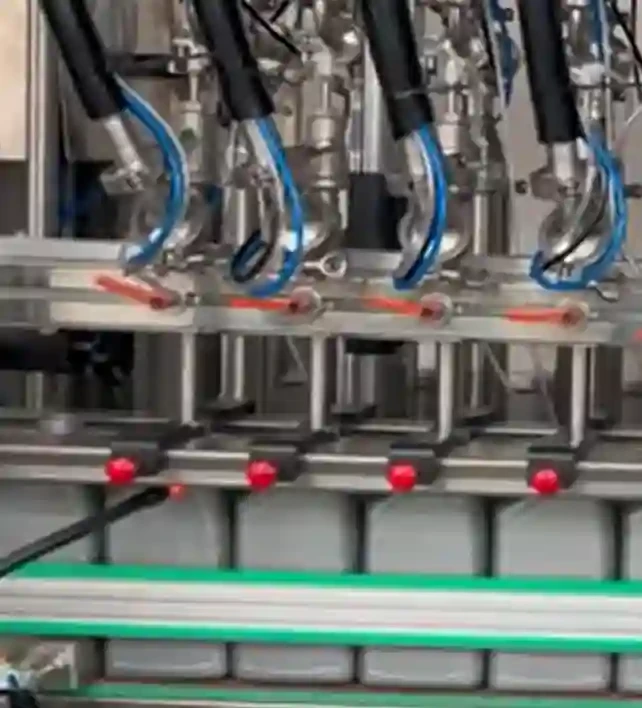
Depending on the filling technology, the system may incorporate:
- shut-off filling nozzles
- suck-back functions
- anti-drip valve structures
- Drip Tray
Its purpose is to draw back the final drop of liquid, prevent dripping, and keep the container clean before capping and labeling.
How Should You Select the Right Lubricant Filling Method?
Lubricant Filling Machine technology has a direct impact on dosing accuracy, product loss, production efficiency, and long-term operating cost.
Although a small amount of overfill may seem insignificant at the individual container level, repeated over thousands of bottles it can result in considerable lubricant waste. For this reason, a filling system should not only achieve the required accuracy during initial setup, but also maintain consistent dosing performance throughout continuous production.
The appropriate filling method depends on lubricant viscosity, container size, target output, filling volume, and the required level of automation.
1.Servo Gear Pump Filling

Servo gear pump filling is commonly used for engine oils, hydraulic oils, gear oils, and other industrial lubricants.
The filling volume is controlled through servo-driven pump rotation, allowing parameters to be adjusted electronically through the control system. This makes changeovers between different container sizes and lubricant products more efficient.
Servo gear pump systems are particularly suitable for production lines processing multiple lubricant specifications .
2. Servo Piston Filling
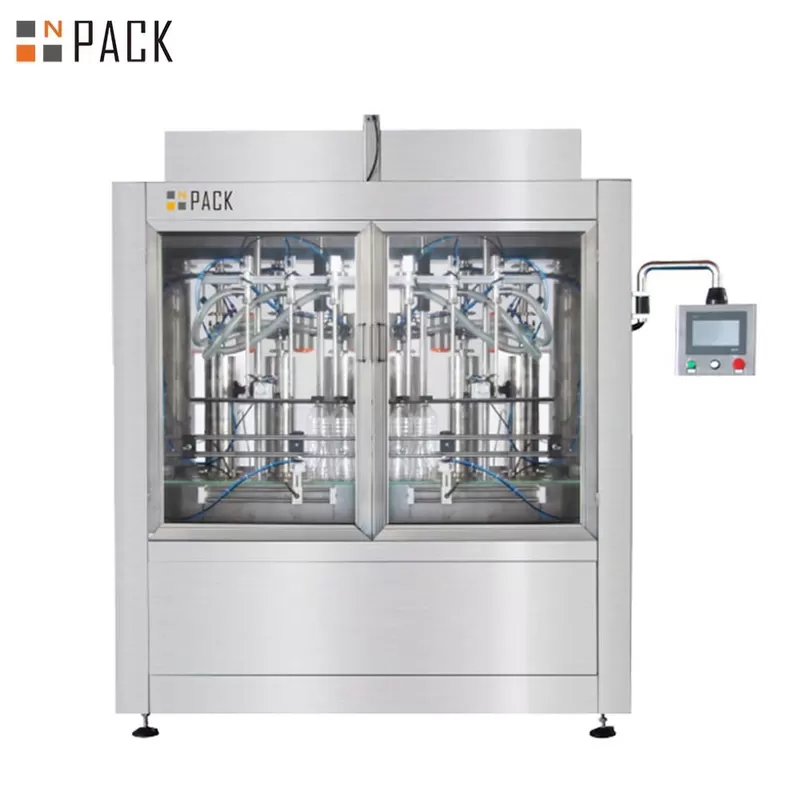
Servo piston filling uses positive displacement to deliver a defined volume of product during each filling cycle.
This method is well suited to medium- and high-viscosity lubricants and can provide consistent volumetric accuracy when the piston size, valve structure, and filling speed are correctly matched to the product.
It is often selected for applications where stable dosing and reliable handling of viscous materials are priorities.
3.Net Weight Filling
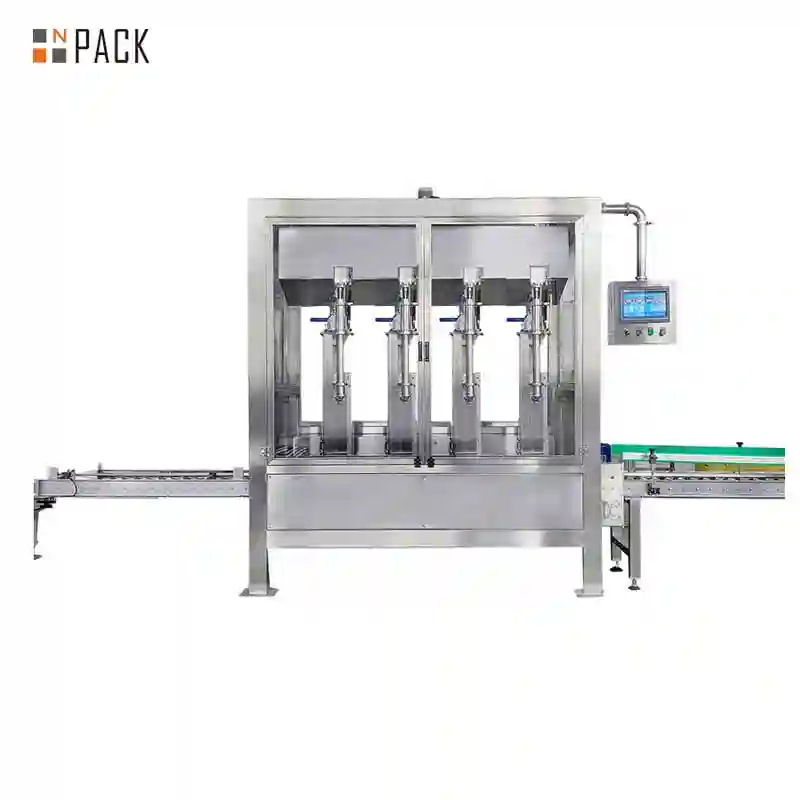
Net weight filling controls the filling process according to the actual weight of lubricant dispensed into each container.
Because the measurement is based on product weight rather than volumetric displacement, this method is often used for larger containers, drums, pails, or applications where weight-based filling accuracy is required.
It can also help compensate for certain variations in product density or operating conditions.
Selecting the Appropriate System
There is no single filling technology that is ideal for every lubricant product.
The final equipment configuration should be determined according to the lubricant characteristics, filling volume, container format, required output, accuracy target, and production environment. Evaluating these factors together helps ensure stable filling performance while reducing product loss and unnecessary operating cost.
Why Should the Capping System Be Evaluated Together With the Filler?
The capping process is a critical part of lubricant packaging machine.
Lubricant containers may use:
- screw caps;
- tamper-evident caps;
- lined caps;
- press-on caps;
- closures combined with induction sealing
Each closure requires appropriate cap feeding, positioning and tightening control.
Incorrect cap placement can reduce capping efficiency and may also affect downstream sealing quality.
For induction-sealed lubricant bottles, proper cap and liner positioning is particularly important.
The bottle, cap and sealing liner should therefore be evaluated as a complete packaging system during line design.
How Can Filling Conditions Affect Labeling Quality?
Labeling quality depends partly on the condition of the container entering the labeling machine.
Oil contamination on the bottle surface can reduce label adhesion and affect final packaging appearance.
This means that stable labeling performance begins upstream.
Clean filling, effective anti-drip control, accurate bottle handling and stable conveyor transfer all contribute to reliable label application.
Depending on the container format, lubricant packaging lines may use:
- front and back labeling machines
- wrap-around labeling machines
- multi-side labeling systems
- top labeling machine
- inkjet or laser coding equipment.
Rectangular, irregular or handled lubricant bottles may also require orientation before labeling.
Bottle geometry and label position should therefore be confirmed during the initial line design stage.
How Can the Right Lubricant Filling Solution Be Configured?
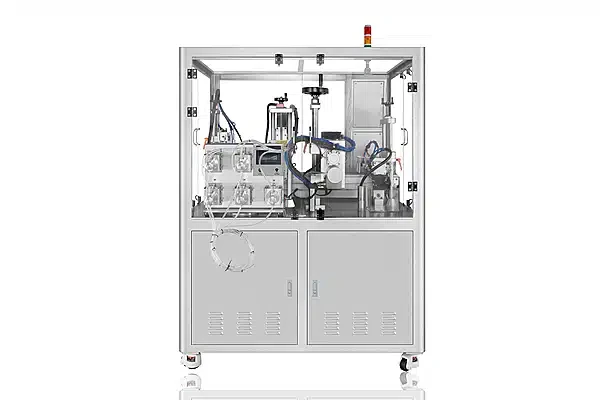
Lubricant filling equipment can be supplied as a standalone machine or integrated into a complete filling, capping and labeling line.
The final configuration should be based on:
- product viscosity
- filling volume
- bottle design
- cap type
- label format
- required output
- automation level
- available production space
We manufacture filling machines, capping machines and labeling machines for lubricant oils and other industrial liquid applications.
By evaluating product and packaging information at the beginning of the project, the filling line can be configured more accurately for actual production conditions.
Customer Case : Automatic 12 Nozzles Lubricant Oil Filling Capping Labeling Machine in USA
Project Background
In 2025, Npack partnered with a lubricant manufacturer in the United States to provide a complete lubricant oil filling solution for its new production facility. The project involved filling a wide range of products, including motor oil, engine oil, hydraulic oil, gear oil, and so on. One of the main challenges was the variation in product viscosity, filling volume, and container specifications, which placed high requirements on the filling accuracy, equipment stability, and overall flexibility of the production line.
Key Project Parameters
- Product: engine oil/motor oil
- Filling Volume: 1L/5L
- Bottle Type: Jerrycan
Filling Solution
Based on the customer’s bottle types, filling volumes, lubricant characteristics, production capacity, and factory layout, Npack developed a customized automatic lubricant filling line for its U.S. facility.
The main equipment included:
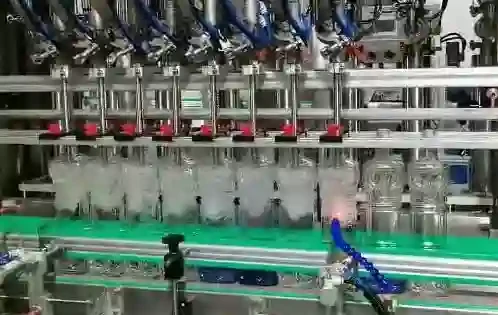
- Automatic 12-Nozzle Piston Filling Machine
- Automatic 6-Wheel Screw Capping Machine
- Automatic Double-Sided Labeling Machine
The complete line provides stable filling accuracy, reliable capping and labeling performance, and efficient production for different lubricant products and container specifications.