
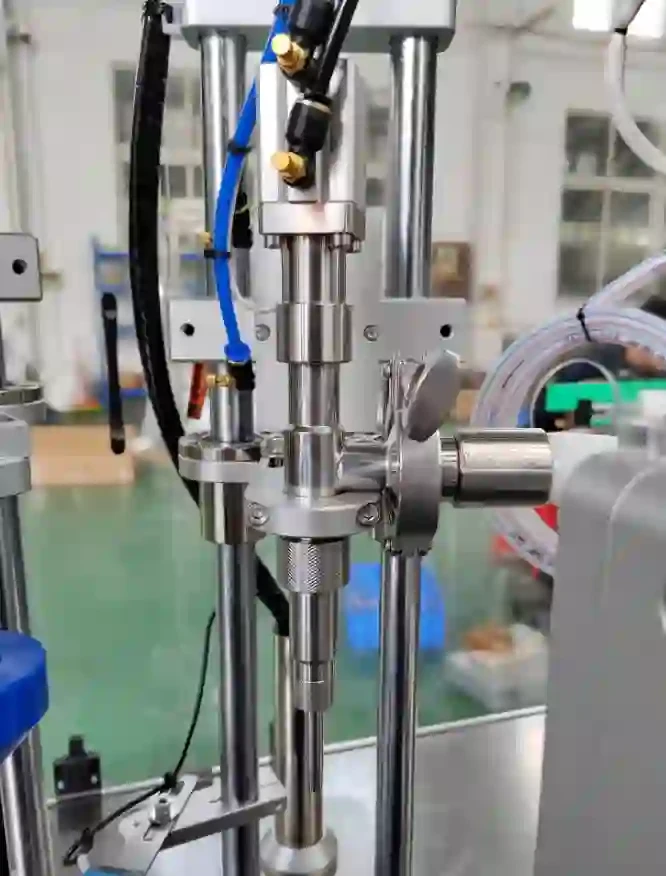

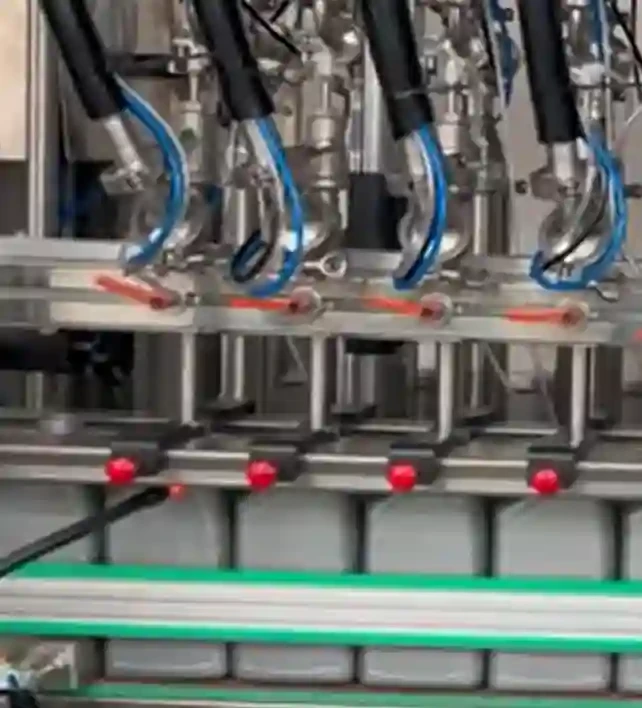
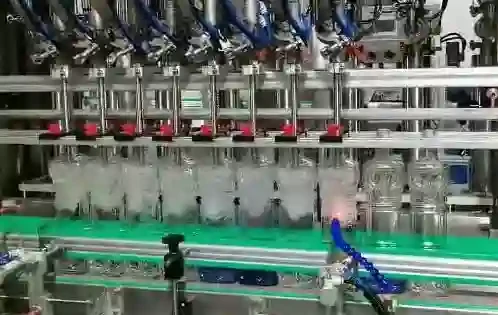
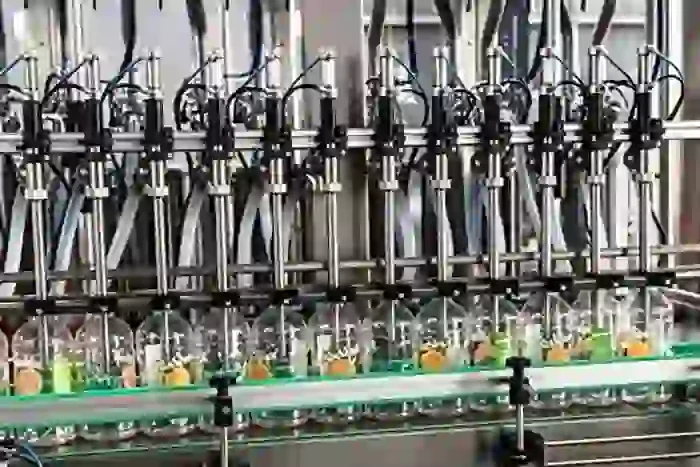
The Flowmeter Liquid Filling Machine ensures precise and consistent filling for a wide range of liquids, including edible oils, lubricants, beverages, water, wine, and semi-viscous products. High-precision elliptical gear flow meters measure liquid in real-time, providing accurate dosing, minimal waste, and uniform fill levels across varying viscosities.
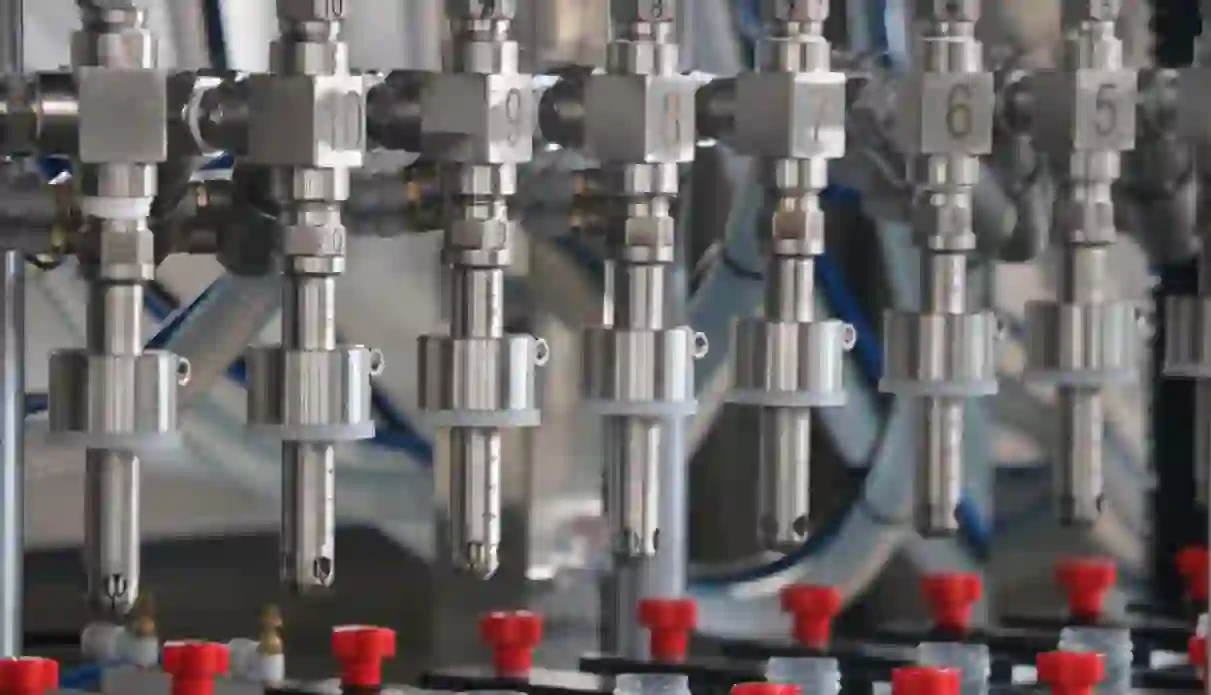
Made from SUS304 stainless steel, the machine meets food-grade hygiene and CE standards, offering durability, corrosion resistance, and easy cleaning. Its inline design supports 2–20 customizable filling heads, with diving nozzles to prevent foaming in sensitive liquids. PLC control with a touch screen enables easy fill volume adjustment, production monitoring, and quick changeovers.
Compact and energy-efficient, the Flowmeter Filling Machine integrates smoothly into automated production lines with capping, labeling, and packing systems. With a filling range of 200ml–5L, it delivers reliable, high-speed, and economical performance, ideal for modern liquid packaging in food, beverage, and chemical industries.
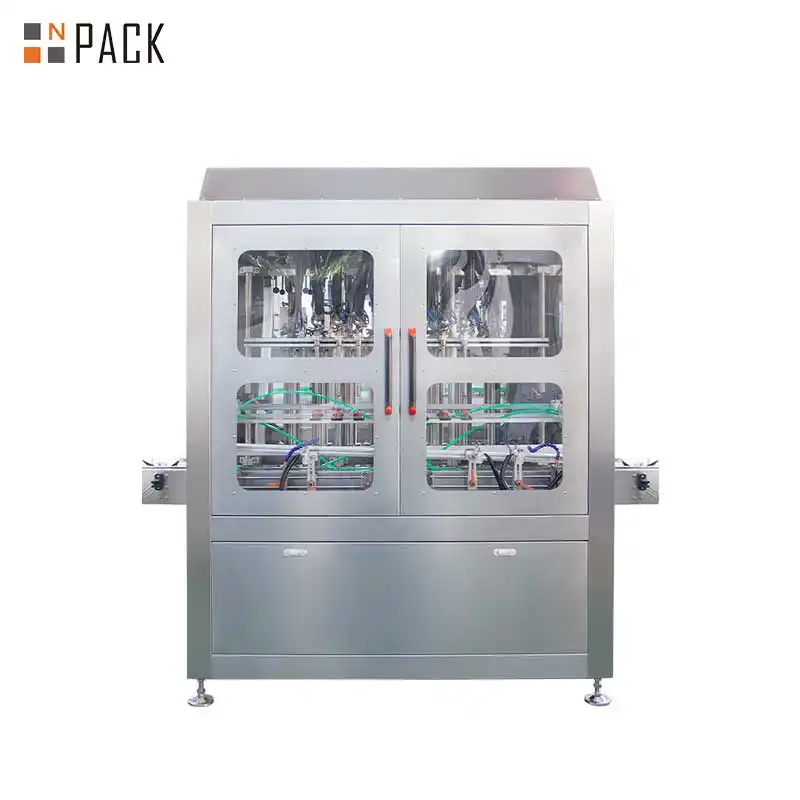
FlowMeter Liquid Filling Machine— Accurate, Fast, and Versatile
1.Robust & Chemical-Resistant Design
Constructed from 304 stainless steel, with optional 316SS contact parts, ensuring durability and suitability for a wide range of liquids.
2.Accurate Filling Volume Control
The flowmeter technology precisely measures liquid volume for each fill, ensuring uniform levels and minimizing customer complaints.
3.Reduced Waste and Cost Efficiency
Automatic shut-off at the programmed volume prevents overfilling, reducing product waste and operational costs.
4.Adaptable to Various Liquids
Compatible with low- to medium-viscosity products, including water, juice, dairy, and sports drinks. Optional diving nozzles manage foamy liquids effectively.
5.User-Friendly Interface & Simple Setup
Touchscreen control with PLC system allows easy adjustment of fill volumes, bottle sizes, and production parameters, simplifying operation and line changes.
6.Clean and Safe Operation
Features no-bottle-no-fill detection and a drip tray, keeping the workplace clean and ensuring safe, hygienic production.
Technical Parameters
| 1 | Capacity | 800-2500 b/h @ 1L |
| 2 | Filling Volume | 1000-5000ML |
| 3 | Accuracy Liquid level error range | ≤2mm |
| 4 | Power | 2500W, 220VAC |
| 5 | Weight(kg) | 180kgs |
| 6 | Air compressor | ≤0.6Mpa |
Core Components of a FlowMeter Liquid Filling Machine
A flowmeter liquid filling machine is built around several key components that work together to ensure accurate and stable filling:
Flow Sensor: The core measuring unit, commonly using gear flow meters or mass flow meters to accurately measure the product volume in real time.
Control System: Typically a PLC or industrial computer that processes flow sensor data and precisely controls all filling actions.
Filling Valve: Pneumatic or electric valves that start and stop the product flow according to the preset filling volume.
Conveying System: Conveyors or rotary platforms that transport and position containers smoothly throughout the filling process.
Flow Meter Filling Machines Working Principle
Flowmeter liquid filling machines operate through a fully automated and efficient process. The liquid product is supplied from a storage tank or directly from a pipeline and directed toward the filling nozzles. As the product flows, it passes through a flow meter that measures the flow rate in real time.
Based on this measurement, the control system precisely calculates the volume being dispensed into each container. Once the preset volume is reached, the nozzle automatically closes, ensuring consistent and accurate filling.
Flow Meter Filling Machine Working Process
In a flow meter filling machine, the filling cycle follows a clear and controlled sequence. First, the container is accurately positioned under the filling nozzle. The flow meter is then reset to zero to ensure precise measurement. Once the filling Routine Maintenance and Common Troubleshooting
Routine Maintenance and Common Troubleshooting
Routine Maintenance
- Regularly clean and sanitize the product flow path
- Inspect seals and gaskets for wear or damage
- Ensure stable air supply and electrical power
Common Troubleshooting
- Reduced accuracy: Recalibrate the system or check the flow meter for wear or blockage
- Leakage: Inspect valve sealing rings and pipeline connections